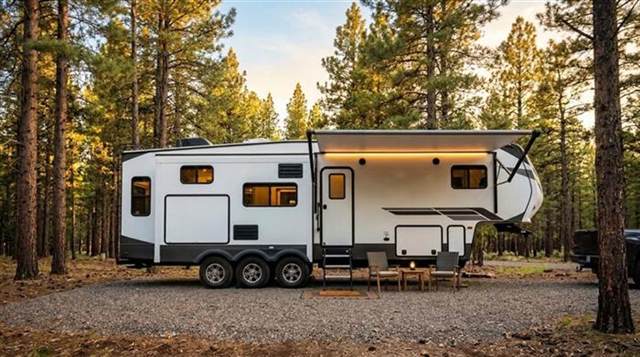
Park at any winter snowbird resort in Florida or Arizona and half the luxury rigs on the street wear Keystone Montana badges. Full-timers adore the whisper-quiet AC and giant master suites. Owning this eighteen-thousand-pound icon still brings peeling sun-baked paint clearcoat, weeping hydraulic slide seals, frozen fridge ice lines, and fast brake wear.
01 • 2-Minute Inspection Chart2-Minute Lot Checks
| Part or Area | What Actually Goes Wrong | How to Check It in 2 Minutes |
|---|---|---|
| Upper Roofline Paint & Decals | Five years of uncovered Southern sun bakes the shiny clearcoat along the rounded upper roof curve until it flakes like peeling skin. | Stand on the truck bed or rear ladder to inspect the top six inches of painted sidewalls for chalky white patches or flaking clearcoat. |
| Hydraulic Slide Cylinders | Silver metal pistons underneath heavy bedroom and living room slides can weep or spray red hydraulic oil—and hydraulic lines can retain extreme skin-penetrating pressure even when powered off. | Keep your hands and body completely clear of extended slides and hydraulic rams! Look visually from a safe distance outside with a flashlight for red oil drips on the ground or cylinder housing, and refer any leak to qualified service. |
| Fridge Ice-Maker Water Tube | A skinny plastic water line coiled behind the home-size fridge holds trapped water in winter, splitting open when thawed in spring. | Slide or peek behind the lower kitchen fridge grill with a bright flashlight to check for warped floorboards or green brass corrosion. |
| Wheel Bearings & Suspension Links | Hauling sixteen to eighteen thousand pounds across mountains chews through axle bearings, brake shoes, and metal suspension bolts rapidly. | Look behind all four or six wheels for grease slung across backing plates and ask used sellers for annual bearing-pack receipts. |
| Motorized 50-Amp Cord Reel | Thick rubber campground power cables turn stiff as iron bars on forty-degree mornings, jamming the electric spool motor inside the bay. | Pull ten feet of thick power cord out of the rear bay and hold the retract button to confirm the motor winds smoothly. |
Common Trouble Spots
Brutal Sunshine vs. Full-Body Paint & Vinyl Stickers
Nothing turns heads rolling into a campground quite like a forty-foot Montana gleaming in full-body car-style paint. Buyers often assume painted RV fiberglass shrugs off sunshine forever just like a parked pickup truck.
Read deeper field notes
Unfortunately, the curved upper roof edge tilts directly toward the noon sun twelve months a year. Without regular UV wax protection or covered barn storage, intense desert and Florida ultraviolet rays cook clearcoat layers right along the awning rail and front cap brow.
Standard white fiberglass Montanas avoid clearcoat peel. Still, their swooping vinyl graphic stickers still crack and curl after five sunny summers.
Sneaky Fridge Water Lines & under pressure Hydraulic Cylinders
Ask any mobile RV tech what ruins the most luxury Montana kitchen floors every April, and they point straight behind the double-door home-size fridge. Even when owners diligently pump pink antifreeze through sinks and toilets in November, clear water often hides trapped inside the tiny electric ice-maker electric gas valve if they do not follow the specific fridge maker’s winter prep procedure.
Read deeper field notes
One hard January freeze splits that quarter-inch valve silently so nothing leaks until you hook up campground water in April! Meanwhile, underneath the rig, hydraulic slide pistons and leveling jacks operate under extreme pressure.
Per Lippert’s Master part Manual and DOT safety warnings, never reach beneath an extended slide or feel hydraulic rams/hoses with your fingers—retained hydraulic pressure can cause severe skin-penetrating injection injuries even when the system is off, and unsupported slides pose crush hazards.
Big Rig Comfort Requires Big Rig upkeep
Inside newer Montanas, hidden attic air tunnels replace loud ceiling AC roar with a gentle library whisper so you never crank the TV volume to forty. King bedrooms, massive front windshields on select floorplans, and spacious pantries make six-month road trips feel effortless.
Read deeper field notes
Underneath the skirt, however, eight or nine tons of rolling mass punishes brakes and suspension hardware relentlessly. Treating wheel bearing grease, tire pressure checks, and brake checkups like optional suggestions on a Montana invites expensive roadside tow trucks—budget for annual axle service just like owning a boat.
Walkaround Checklist
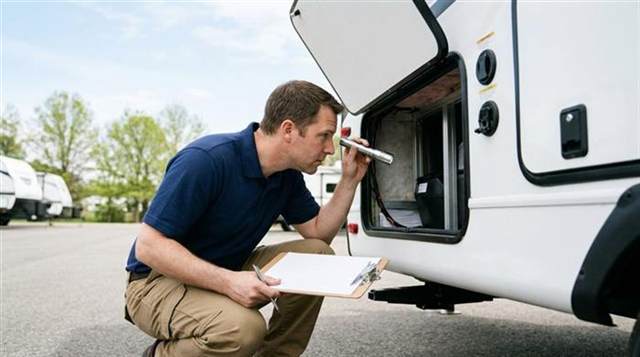
Bring a flashlight to the dealer lot or seller's driveway and check every box below before handing over a deposit:
- Run the exact 17-digit VIN through the NHTSA Recall Database (https://www.nhtsa.gov/recalls) and Keystone’s recall lookup to confirm whether any open safety recalls exist or have normal completion records.
- Compare the Montana’s max loaded weight and estimated loaded kingpin weight—plus your fifth-wheel hitch, passengers, fuel, and cargo in the truck—against your specific truck’s door-jamb Tire & Loading Information payload sticker, rear axle weight limit, max loaded weight, combined weight limit, and hitch rating.
- Inspect the painted front cap brow and upper sidewall curves closely in bright daylight for hazy spots or flaking clearcoat.
- From a safe distance outside (never reaching underneath an extended slide or touching rams/hoses with hands or napkins), use a flashlight to inspect the silver hydraulic cylinders and ground underneath for red oil drips. Route any suspected leak to qualified service.
- Pull out the bottom pantry or cabinet adjacent to the big fridge and shine a flashlight toward the floor wall seam for water marks.
- Turn on both AC units inside and confirm quiet, strong airflow through ceiling vents without loud whistling leaks.
- Open the front hydraulic pump bay and battery compartment to visually verify clean terminals, dry hose crimps, and dry floor decking without touching under pressure hydraulic lines.
Yes, there is a reason Montana has outsold nearly every luxury fifth wheel in North America for two straight decades. As long as you match its max loaded weight and kingpin weight with a properly rated one-ton truck (often a dually), wax the upper paint twice a year, and prep for winter the home-size fridge strictly per the appliance maker’s manual, it remains a phenomenal full-time home on wheels.
Want the full factory score? Read our Keystone RV Brand Dossier.
Common Questions
What is the difference between Keystone Montana and Montana High Country?
Flagship Montana models are full-weight, full-height luxury giants built especially for extended or full-time living behind heavy one-ton pickups. Montana High Country trims down base weight with slightly shorter floorplans. Still, you must still compare the trailer’s max loaded weight and measured/estimated loaded kingpin weight—plus hitch hardware, passengers, and cargo—against your specific truck’s door-jamb payload, axle weight limit, max loaded weight, and combined weight limit stickers.
How do you properly prep for winter a Montana home-size fridge ice maker?
Because home-size fridges and ice-maker electric valve valves vary by brand and model (and can be damaged by improper air pressure or unapproved fluids), always follow the exact fridge maker’s owner’s manual for winterizing and draining the water supply line, filter housing, and ice-maker valve.
Why are newer Montana AC units so much quieter than old ones?
Older campers bolted noisy AC compressors directly over a square hole in the living room ceiling. Newer Montanas use home-size-style Blade airflow ducts and return-air mufflers that bounce sound waves inside insulated ceiling channels before air enters the room.
Related Guides
Keystone RV
Brilliant engineers designed color-coded wiring and rot-proof floors, then handed them to an assembly line paid by…
Rockwood Mini Lite
Forest River packs the Rockwood Mini Lite (and its twin brother, the Flagstaff Micro Lite) with big-camper…
Cherokee Grey Wolf
Walk onto any RV lot asking for maximum gadgets per dollar and you will meet the Forest River Cherokee Grey Wolf.
Skip Dealership Paint & Fabric Add-Ons
Right before you sign final loan papers, finance managers push $1,295 to $2,495 "ceramic exterior paint shield and…