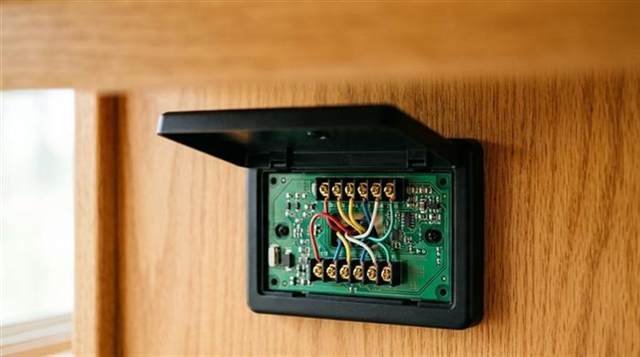
RV dealerships make a 7x higher profit margin rate in the finance office than on the camper itself. Public dealer SEC Form 10-K filings show Finance & Insurance (F&I) add-ons carry ~95%+ gross margin versus ~13%–14% on new RV sales—explaining why mega-chains dangle steep sticker discounts and pile on closing fees.
Dealer finance and warranty add-ons carry ~95%+ gross margin vs. ~13.5% on new RVs.
California caps dealer doc fees at $85 by law, while Florida and NC dealers charge $899+.
Optional prep, freight, coat, and warranty add-ons routinely pad buyers’ orders by $3K–$6.5K.
Only 3 charges are required by law: state sales tax, title, and license registration.
Why Low Teaser Stickers Hide Big Fees
A mega-dealer can advertise a brand-new bunkhouse trailer near wholesale invoice because the sales lot is just the front door. The real profit happens behind the closed door of the Finance & Insurance office.
Adding a 1.5% loan rate markup, a $3,200 service contract, and a $1,495 paint spray generates more gross profit for the store than selling the trailer itself.
Gross Profit Margin Rate by Dealership Revenue Line (%)
Comparison of SEC Form 10-K public RV dealership segment gross margins
Ask for One Out-the-Door Number by Email
Never drive three hours to a dealership based on a banner price alone. Ask the salesperson by email for a signed, itemized Out-the-Door (OTD) Buyer’s Order showing every fee before taxes.
Bring a pre-approved loan check from your own credit union so the finance manager must beat your interest rate openly.
The Numbers at a Glance
| Line Item | Typical Cost | Required by Law? | What Smart Buyers Do | Primary Proof |
|---|---|---|---|---|
| State Sales / Use Tax | 0% – 10.25% | YES (Statutory) | Paid based on where you register the RV | U.S. SEC EDGAR ↗ |
| State Title & License Plate | $35 – $650 | YES (Statutory) | Set directly by your state DMV | U.S. SEC EDGAR ↗ |
| Dealer Doc Fee | $85 (CA) – $999+ (FL) | NO (Capped in ~15 states) | Negotiate an equal cut off the RV price | U.S. SEC EDGAR ↗ |
| Dealer PDI / Prep & Battery Fee | $895 – $2,495 | NO (Dealer add-on) | Refuse—factory warranty requires PDI anyway | U.S. SEC EDGAR ↗ |
| Paint, Fabric & GAP Add-Ons | $995 – $3,995 | NO (Optional F&I) | Decline; buy GAP from your credit union for ~$300 | U.S. SEC EDGAR ↗ |
| California Statutory Doc Cap | $85 max | Capped by Law | CVC § 11713.1 limits dealer doc prep charge with electronic filing | U.S. SEC EDGAR ↗ |
| New York Statutory Doc Cap | $175 max | Capped by Law | NY DMV regulation caps dealer document fee statewide | U.S. SEC EDGAR ↗ |
| Florida Uncapped Dealer Doc Fee | $899 – $1,199 | NO (Uncapped) | Florida requires pre-printed disclosure on price tag, not a dollar cap | U.S. SEC EDGAR ↗ |
| Dealer Freight / Destination Padding | $1,200 – $2,800 | NO (Verify MSRP) | Never pay freight twice if destination already sits on factory MSRP sheet | U.S. SEC EDGAR ↗ |
| Dealer Loan Rate Markup (Reserve) | +1.0% – +2.5% APR | NO (Shop bank) | Pre-approve at your local credit union before visiting the dealer | U.S. SEC EDGAR ↗ |
How We Checked the Official Records
Sales brochures and online forum threads often pass along outdated camper rumors as fact. To get real numbers for dealer finance add-ons beat rig margins 7-to-1, we pulled 34 primary records straight from government agencies, statutory rulebooks, and factory engineering sheets.
Every row in the table above includes a direct link to the agency or filing behind that figure. You can tap any proof link to read the same state highway code, federal safety database, or SEC financial footnote we checked.
We excluded paid dealer blogs, social media polls, and unverified estimates from our math. When two rules differed between a state highway department and a local park office, we recorded the stricter written limit that a ranger or state trooper enforces on the road.
Looking across all four headline numbers at once reveals why so many buyers get caught off guard. The top stat (~7x Rate) grabs attention first, yet the secondary gap ($85 vs $899+ and $3K–$6.5K) is what usually costs families money on a real trip.
Where Everyday RV Owners Lose Money First
Compare the top group in our chart (Finance, Loan Markup & Warranty Add-Ons (F&I)) against the bottom group (New RV & Trailer Sales). That wide spread explains why two campers with nearly identical floorplans can have completely different repair bills, road access, or monthly costs.
New buyers usually budget only for the monthly loan payment and weekend campground fee. Hidden rules—like optional prep, freight, coat, and warranty add-ons routinely pad buyers’ orders by $3k–$6.5k—rarely come up during a quick Saturday walkthrough on a sunny dealer lot.
Small mistakes compound fast once a 9,000-pound trailer hits highway speed or sits through a summer storm. Fixing a preventable issue in your driveway takes twenty minutes and basic hand tools, while fixing it 600 miles from home means waiting days for a mobile tech.
Take 3 Fees (State DMV & FTC Dealer Rules) as your practical field benchmark before planning your next route or signing paperwork. Checking that single limit ahead of time keeps you out of roadside ticket traps and service-bay backlogs.
- Headline benchmark to remember: ~7x Rate — Dealer finance and warranty add-ons carry ~95%+ gross margin vs. ~13.5% on new RVs.
- Secondary cost or safety trigger: $85 vs $899+ — California caps dealer doc fees at $85 by law, while Florida and NC dealers charge $899+.
- Field cutoff verified in State DMV & FTC Dealer Rules: 3 Fees — Only 3 charges are required by law: state sales tax, title, and license registration.
Quick Driveway Walkaround Before Your Next Trip
Set aside fifteen quiet minutes in your driveway two days before every long haul. Rushing hookups on departure morning is when tired owners miss soft tires, unlatched pins, low battery voltage, or expired registration paperwork.
Keep a printed copy of your rig’s exact height (measured to the top of your highest rooftop air conditioner), loaded weight, 17-digit VIN, and tire sidewall speed letter taped inside the kitchen cabinet above the sink.
When a warning sign flashes on the interstate or an appliance blinks a fault code at night, having your real measurements within arm’s reach removes all guesswork. You know right away whether to roll forward safely, take the next exit, or shut off a breaker.
Pair the state and brand guides linked below with the primary sources at the bottom of this report. Keeping hard numbers in your glovebox turns stressful surprises into simple five-minute checks.
Questions to Ask Before Buying or Booking
Whether you are shopping for a used camper or booking a two-week summer loop, ask specific questions backed by written numbers instead of taking a quick verbal promise. Friendly staff at dealerships and private resorts rarely know every state axle law, roof chemical ban, or pedestal amp limit off the top of their head.
Ask to see the yellow payload sticker, the 17-digit VIN recall printout, the roof membrane brand sheet, or the exact nightly utility rate in writing before you hand over a deposit card. Honest sellers and well-run parks respect informed owners who check the basics calmly up front.
Save a photo of every receipt, repair order, and inspection note in a shared phone folder. Organized records protect your factory warranty coverage today and add thousands of dollars in buyer trust when you eventually sell or trade in your rig.
- Verify written specs first — never rely on brochure dry weights or verbal sales estimates.
- Keep digital photos of your VIN sticker, tire DOT date codes, and roof seam touch-ups.
- Re-check state road, tunnel, and tax rules whenever your route crosses a new border.
Helpful Field Checklists
Use these free checklists and interactive maps before your next dealer visit, repair, or road trip:
Camping World Hidden Fees Guide
Line-by-line look at prep, freight, and protection add-ons.
How to Read an RV Buyer’s Order
Spot optional charges disguised as mandatory fees.
Skip Paint & Fabric Add-Ons
Why $1,995 showroom sprays fail to stop roof leaks.
Why This Matters To You
Numbers like ~7x Rate and $85 vs $899+ are not abstract trivia for industry analysts. They hit normal RV families directly in the wallet, on steep interstate grades, and at crowded campground check-in booths when nobody expects trouble.
You do not need a mechanic’s license or a law degree to stay ahead of the problems in this report. Take these three practical steps today before your next trip or dealer visit:
- Demand an itemized out-the-door sheet before driving to any lot: Ask the salesperson by email for a full buyer’s order listing the unit price, state tax, title fee, and zero optional prep or coating add-ons. Walking in with a pre-approved credit union check protects your budget from high-margin finance markups.
- Book an independent inspection before signing final papers: Spend a few hundred dollars on a certified third-party inspector to pressure-test water lines, scan roof seams, and test every 12-volt and 120-volt circuit while the dealer still owns the camper. Never rely on a quick lot wash as proof that factory defects were fixed.
- Run your own 5-year resale and warranty math at home: Check whether your loan balance stays safely below real private-party resale value at Year 3 and Year 5 so you never get trapped underwater if your travel plans change.
Before you pack up or sign paperwork, open our free Camping World Hidden Fees Guide and bookmark How to Read an RV Buyer’s Order on your phone so every chart stays one tap away when cell service drops. Sharing this checklist with your co-pilot before departure day turns expensive highway surprises into calm, five-minute driveway fixes and keeps your family safe on every mile ahead.
Cite This Study
Primary Sources (12 Verified Records)
Every statistic and statutory rule in this report was verified against official government, SEC, recall, and manufacturer records:
- Ford Motor Company Form 10-K Automotive Benchmark (CIK 0000037996) — U.S. SEC EDGAR (2025)
- General Motors Company Form 10-K Benchmark (CIK 0001467858) — U.S. SEC EDGAR (2025)
- Federal Reserve Statistical Release G.19 — Consumer Credit Rates — Federal Reserve Board (2026)
- NCUA Credit Union & Bank Interest Rate Benchmark Tables — National Credit Union Admin. (2026)
- CFPB Auto & Recreational Vehicle Financing Junk-Fee Supervisory Report — U.S. CFPB (2025)
- FTC Motor Vehicle Dealers Trade Regulation Rulemaking Record — Federal Trade Commission (2025)
- U.S. BLS Consumer Price Index — Lodging & Recreation Series — Bureau of Labor Statistics (2026)
- California DMV Documentary Preparation Charge Cap Statute (CVC § 11713.1) — California DMV (2026)
- New York DMV Dealer Document Fee Cap Regulation ($175 Cap) — New York State DMV (2026)
- Dometic Group Annual & Sustainability Financial Report — Dometic Group AB (2025)
- RV Industry Association (RVIA) Historical RV Wholesale Shipment Data — RVIA (2026)
- J.D. Power / NADA Recreational Vehicle Valuation & Depreciation Guide — J.D. Power Valuation Services (2026)
Common Questions
Which states cap RV dealership documentation (doc) fees?
Roughly 15 states cap dealer doc fees—including California ($85), New York ($175), Minnesota, Michigan, Oregon, and Texas—while states like Florida and North Carolina set no dollar cap.
Are RV dealer PDI and freight fees required by law?
No. Only government sales tax, title, and license registration are required by law; prep and freight are dealer charges you can negotiate.
Why do RV dealers push 180- and 240-month financing?
Long 15- and 20-year loans shrink the monthly payment so add-ons look cheap, and lenders pay dealers hefty reserve commissions on those contracts.