After five hours of highway driving, you pull onto a campsite that looks completely flat to the naked eye. Eager to relax, someone pulls the hitch release latch and raises the tongue jack before setting wheel chocks—and as the coupler lifts clear of the hitch ball, the unchocked travel trailer begins rolling on the slight grade.
01 • Field BreakdownHow It Happens & How to Prevent It
Why Unhitched Trailers Have Zero Built-In Parking Brakes
While your trailer is hitched to the tow vehicle, your truck’s parking brake and transmission hold both vehicles stationary. Unlike big-truck air-brake semi-trailers whose spring brakes lock automatically when air lines disconnect, standard electric drum brakes on camping travel trailers and fifth-wheels have no moving parking brake once uncoupled!
Read deeper field notes
Do not assume pulling the emergency breakaway cable can serve as a parking brake, and do not assume the breakaway switch is always wired to the main RV house battery—some trailers use a dedicated breakaway battery. Meanwhile, others wire into the house bank, and electric brake magnets rapidly drain any battery and are strictly for temporary danger highway separation, not holding a parked trailer.
Worse yet, if a trailer ever starts rolling, NEVER try to grab the bumper, chase it on foot, or reach between the moving tongue and truck to yank the breakaway cable by hand!
How Rolling Inches Can Damage Landing Legs and Tongue Jacks
Even if safety chains stop a rolling trailer after a few inches, unhitching without properly positioned wheel chocks puts severe side-load forces on electric tongue jacks and fifth-wheel landing gear! Vertical telescoping jack tubes are engineered for straight downward vertical weight—not sideways rolling force.
Read deeper field notes
When unchocked tires shift forward or backward as weight transfers onto the front jack footpad, the leverage can bend landing legs, bind coupler latches, or damage mounting brackets on the A-frame.
Place Rated Wheel Chocks Fore and Aft on Both Sides. X-Chocks Do Not Replace Them.
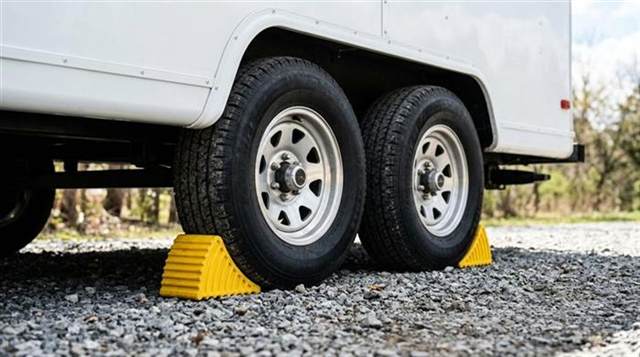
Flimsy hollow plastic wedges can slide across wet asphalt, damp grass, or loose gravel. Use solid, heavy-duty rubber wheel chocks rated for your trailer’s gross vehicle weight rating (max loaded weight) and tire diameter so they bite firmly against the ground and tread.
Read deeper field notes
Follow your RV maker’s chocking instructions. Place rated standard wheel chocks tightly both in front of AND behind the tires (fore and aft) on BOTH sides of the trailer before uncoupling!
Many campers also add scissor-style X-chocks between tandem tires to reduce slight cabin rocking once parked. However, X-chocks are strictly comfort stabilizers.
They NEVER replace standard fore-and-aft ground wheel chocks on any grade.
Why Side-to-Side Leveling Comes First, Front-to-Back Second
Check side-to-side level before uncoupling from the tow vehicle! If one side sits low, pull the trailer onto rated leveling blocks or ramps wider than the full tire tread footprint, shift the tow vehicle into Park with the parking brake firmly set, and place your rated fore-and-aft wheel chocks tightly on both sides of the trailer.
Read deeper field notes
Only AFTER all wheel chocks are firmly wedged fore and aft on both sides should you relieve coupler tension, disconnect the 7-way cord, safety chains, and breakaway cable, release the coupler latch, and use the tongue jack to level front-to-back.
5 Golden Rules to Live By
| Rule # | Campground Commandment |
|---|---|
| Rule #1 | Place rated wheel chocks tightly fore and aft on BOTH sides of the trailer before touching the coupler latch or fifth-wheel handle. |
| Rule #2 | Remember that scissor-style X-chocks only reduce cabin movement. They NEVER replace standard ground wheel chocks. |
| Rule #3 | NEVER step in front of, grab, or chase a moving trailer by hand to try to stop it or pull a breakaway pin. |
| Rule #4 | Never rely on the emergency breakaway switch as a parking brake, and test the breakaway system only per the exact maker procedure. |
| Rule #5 | On departure day, wheel chocks are the LAST item removed after the coupler is latched, locked, tug-tested, and chains/cables are hooked up. |
Attach a bright neon rope lanyard to the eyebolt of each heavy rubber wheel chock so you can pull them free without reaching under the tires—and always follow your exact hitch and breakaway maker manuals for pre-trip coupling and breakaway checks before pulling onto the road!
Campground FAQs
Can I use the emergency breakaway cable as a parking brake, or grab it if the trailer starts rolling while unhitching?
No! Never approach or reach toward a rolling trailer to grab a breakaway cable—you can be pinned or crushed. In addition, the breakaway system is only for an emergency on-road separation. Not all rigs power it from the main house battery. Some use a separate breakaway battery, and electric magnets cannot hold a parked trailer indefinitely. Test your breakaway system only while stationary according to your exact breakaway and trailer maker instructions.
Why won’t my ball coupler latch release when I try to unhitch on a slight slope?
The trailer tongue is binding tightly against the front or back of the hitch ball. Make sure rated wheel chocks are wedged firmly fore and aft on both sides first, then use the tow vehicle gently to relieve the pressure on the ball, set the truck parking brake firmly before shifting to Park, and re-verify the chocks before unlatching.
Do scissor X-chocks between tandem tires replace regular rubber wheel chocks?
Never! X-chocks only brace one tire against the other to reduce slight movement while walking inside the camper. Always chock the wheels against the ground fore and aft on both sides with rated standard wheel chocks.
Related Guides
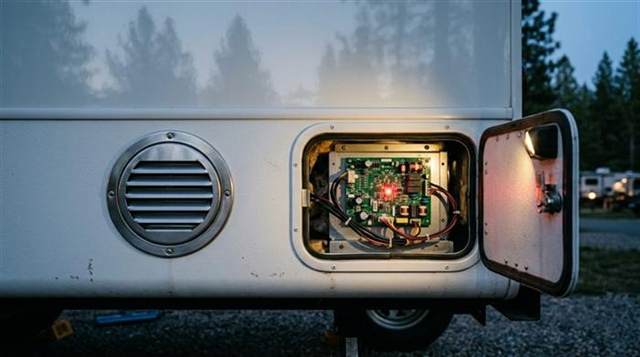
Keeping Mice & Wasps Out of Your RV
Rodents can squeeze through a quarter-inch gap—but sealing the wrong opening or adding furnace vent screens…
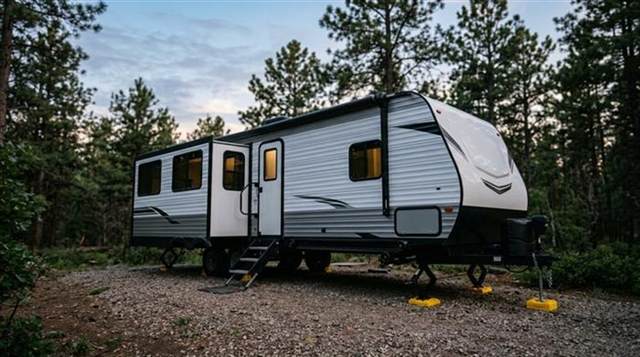
Lippert Auto-Leveling Jack Error
Seeing "EXCESS ANGLE," "OUT OF STROKE," "LOW VOLTAGE," or a jack fault on your Lippert Ground Control or Level-Up…
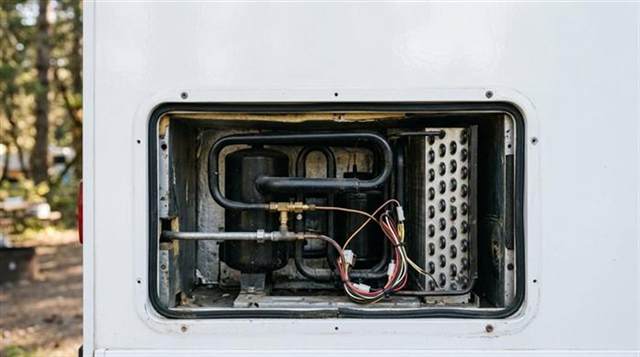
Norcold RV Fridge "no co" Error Code
First: If you smell propane or sharp ammonia, hear gas hissing, see smoke, have an active propane or CO alarm, or…
Alliance RV
Crowdsourced by full-time RVers who begged for single water shutoff valves and carpet-free slides—and actually got…