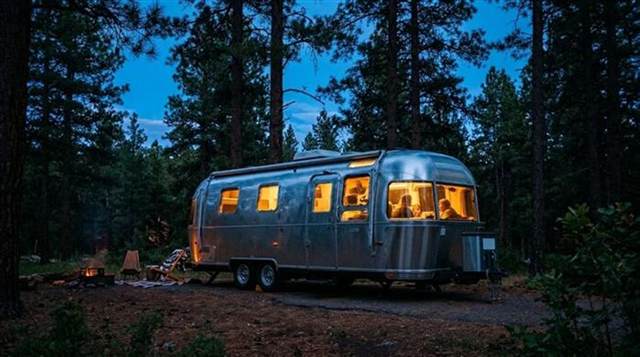
Once your slide-free travel-trailer budget crosses ninety thousand dollars, the entire RV industry narrows down to two radically different masterpieces. An Airstream Flying Cloud/Globetrotter or an Oliver Legacy Elite II. Airstream wins on timeless design magic, wider interior cabins (eight feet wide on full-size lines versus Oliver’s trimmer seven-foot beam), wide-view window abundance, and unmatched cultural cachet. Oliver wins decisively on cold-weather four-season design: its wood-free double-hulled fiberglass shell encloses water tanks, lines, and dump valves inside an insulated inter-hull cavity that stays warm. Meanwhile, the propane furnace is actively running—reducing indoor wall condensation and avoiding clear-coat aluminum corrosion. Though it still requires active heat, propane, and battery power in freezing weather and full winter prep whenever stored or towed unheated below freezing.
01 • 6-Factor Comparison TableSide-by-Side Specs
| Factor | Airstream | Oliver Travel Trailers | Edge |
|---|---|---|---|
| Cold-Weather Four-Season design | 3-season. Aluminum ribs bridge cold & sweat indoors. | 4-season enclosed double hull requires active furnace heat & power. Prep for winter when unheated. | Oliver Travel Trailers |
| Interior Cabin Width & Airiness | Up to 8'0" wide body with wrap-around glass | 7'0" outer width with deep overhead fiberglass lockers | Airstream |
| Exterior Shell upkeep | Requires clear-coat care. Prone to filiform corrosion/dents | Thick marine gelcoat buffs out scratches like a yacht | Oliver Travel Trailers |
| Floorplan & Length Selection | 16 feet to 33 feet across 8+ distinct model lines | Focused primarily on 23.5-foot Legacy Elite II layouts | Airstream |
| Service Access & Wiring Tidiness | Hidden behind riveted interior aluminum skins | Hinged fiberglass hatches reveal museum-labeled manifolds | Oliver Travel Trailers |
| Campground Resale Liquidity | Instant global recognition. Huge buyer pool | Fierce cult scarcity. Near-zero value drop | Tie |
Key Differences
Thermal Physics. Riveted Aluminum vs. Yeti-Cooler Fiberglass
Touch the interior aluminum wall of an Airstream on a twenty-five-degree morning in Yellowstone and you get an instant physics lesson in thermal electric flow. Even with fiberglass batt wall foam stuffed inside the wall cavity, curved aluminum ribs connect outer and inner skins.
Read deeper field notes
That turns warm breath from two sleeping humans and a kettle into chilly moisture droplets. Oliver cuts down thermal bridging by molding two separate frame fiberglass shells—an outer weather hull and a glossy inner cabin liner—separated by radiant foil, foam, and an interior air ceiling air box where plastic pipes, the water pump, holding tanks, and gate valves reside.
However, per Oliver’s 2026 Elite Owner’s Manual (p. 30), four-season build does not make the trailer freeze-proof without conditions.
Keeping internal plumbing above freezing requires actively running the furnace with adequate propane and 12V battery power, and water heaters, tanks, and lines must still be winterized whenever the trailer is stored unheated or towed through freezing temps without heat.
Living Space. Mid-Century Lounge vs. Luxury Submarine
Where Airstream steals hearts within ten seconds is sheer interior breathing room. Step inside a 25FB or 27FB Flying Cloud or Globetrotter and that full eight-foot width, curved wide-view front windows, warm wood-tone laminates, and separate dry shower stall across from the bathroom feel like a boutique Palm Springs hotel suite.
Read deeper field notes
Stepping into an Oliver Legacy Elite II feels much closer to boarding a forty-foot Hinckley sailing yacht—gleaming white molded fiberglass from floor to ceiling, zero wood anywhere, and a waterproof molded wet/hybrid bath. Because Oliver caps exterior width at seven feet and molds deep upper storage lockers, taller campers notice tighter shoulder room until throw rugs and warm lighting soften the cabin.
Hailstorms, Gravel Roads, and Thirty-Year Aging
Take a Great Plains golf-ball hailstorm or Alaska’s gravel Top of the World Highway head-on, and material realities diverge fast. Aluminum skins dent permanently into dimpled golf balls under severe hail, and damaged Airstream panels require skilled buck-rivet artisans days of expensive surgery—plus neglected clear-coat edges can develop spiderweb filiform oxidation.
Read deeper field notes
Oliver’s thick marine gelcoat fiberglass shrugs off hail that totals aluminum rigs, and minor trail rash buffs out in your driveway with marine rubbing compound. Underneath, Oliver bolts its double hull onto a rust-proof extruded aluminum frame isolated over steel suspension rails.
By contrast, post-2021 Airstreams pair painted steel frames with seamless TransCore composite floors.
Serviceability. When RV Appliances Inevitably Misbehave
Even hundred-twenty-thousand-dollar trailers carry mortal water pumps, inverters, and furnaces that eventually quit on a Sunday evening. Fixing hidden wiring or plumbing runs inside an Airstream sometimes requires drilling out interior pop rivets to peel back curved belly skins—a job local RV dealers bill at eye-watering hourly shop rates.
Read deeper field notes
Oliver engineered its interior molds especially for grumpy detail lovers who read wiring schematics for fun. Unlatch hinged fiberglass access doors beneath beds or vanities and you greet tinned marine-grade wiring loomed at ninety-degree angles, labeled breaker blocks, and easy-to-reach plastic valves that make driveway upkeep truly therapeutic.
Which One Should You Buy?
Choose Airstream If...
- You camp primarily spring through fall and want full eight-foot cabin width with a roomy separate dry shower
- You adore warm home-size design touches, wrap-around vista windows, and iconic Silver Bullet nostalgia
- You need floorplans shorter than 20 feet (Bambi/Caravel) or longer than 27 feet with dedicated kids’ bunks
- You prefer local Airstream dealership service centers over factory-direct Tennessee logistics
Choose Oliver Travel Trailers If...
- You camp in cold weather with active furnace heat. While following Oliver’s propane, battery, water-heater, and travel winter prep rules, and want to reduce indoor wall condensation
- You plan rugged high-mileage expeditions to Alaska, Baja, or Newfoundland down gravel highways
- You want 100-percent wood-free double-hull fiberglass and an aluminum frame that salt air cannot corrode
- You geek out over yacht-grade marine wiring, hinged access hatches, and effortless interior washdowns
Common Questions
Which tows easier behind a half-ton pickup: a 25-foot Airstream or an Oliver Legacy Elite II?
Both tow far smoother than boxy trailers thanks to Dexter rubber-cushioned axles and wind-cutting shells. However, their official specs and real-world payload demands differ! Per Airstream’s official 2026/2027 Flying Cloud 25FB limits, the Flying Cloud 25FB carries a 7,300-lb max loaded weight, 860-lb published base hitch weight, and 5,750-lb base weight. Compared to the Oliver Legacy Elite II’s 7,000-lb max loaded weight. Never treat published brochure hitch weight as actual loaded ready-to-camp tongue weight—adding water, batteries, propane, and gear pushes real tongue load higher—and never assume either trailer fits a generic half-ton truck without verifying your measured loaded tongue weight, passengers, cargo, hitch receiver rating, and the truck’s door-jamb payload, max loaded weight, axle weight limit, and combined weight limit ratings.
Does Oliver offer a separate dry bath like Airstream?
No. Even in the flagship 23.5-foot Legacy Elite II, Oliver uses an upscale molded fiberglass wet bath to preserve twin-bed/lounge length inside a nimble seven-foot-wide shell. By contrast, Airstream offers true separate dry showers starting around 23 to 25 feet.
Do post-2021 Airstreams still have wood floors that can rot?
No! Late in model year 2020 for 2021 production, Airstream replaced marine plywood bottom floors across its travel trailer lineup with one-piece waterproof composite flooring, permanently solving its biggest historical long life weakness against Oliver.
- Airstream — Official Flying Cloud 25FB limits. 7,300-lb max loaded weight / 860-lb Base Hitch Weight / 5,750-lb Base Weight. ↗
- Oliver Travel Trailers — 2026 Legacy Elite II Owner's Manual. Cold-Weather Heating & winter prep, p. 30. ↗
- Oliver Support — Proper winter prep & Storage Tips ↗
- NHTSA Federal VIN Safety Recall Lookup (nhtsa.gov/recalls) ↗
- National Weather Service: High-Wind Driving Safety ↗
Related Guides

Airstream
Three thousand hand-buckled rivets wrapped around the exact same Dometic appliances that break inside trailers…
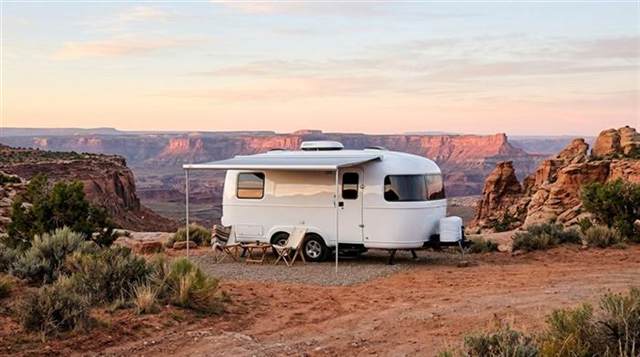
Oliver Travel Trailers
An aircraft-style-grade double-hulled fiberglass yacht on wheels engineered for people who find Airstreams…
Arctic Fox vs. Outdoors RV Four-Season Test
Built across town from each other in La Grande, Oregon—two overbuilt four-season tanks arguing over water tanks…
Surviving a Surprise Overnight Freeze
When temps drop unexpectedly below freezing and your RV winterizing antifreeze is three hundred miles away, follow…