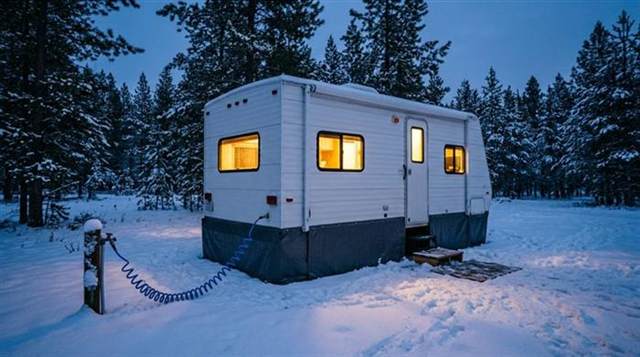
October foliage in the mountains was mild at 60 degrees this afternoon. So nobody gave the weather app a second glance before dinner. Late that evening you step outside under a clear starry sky, watch your breath billow white under the porch light, and check the forecast: a sharp cold front is dropping valley temps well below freezing overnight. Meanwhile, water sits inside your RV plumbing lines.
01 • Field BreakdownHow It Happens & How to Prevent It
Disconnect and Drain Your Exterior Drinking Hose First
Long before interior cabinets cool down, an exposed garden hose lying across frosty grass can freeze solid once temps drop below 32°F! Worse, an uninsulated campground spigot and frozen hose can damage your water pressure regulator and the city-water inlet check valve on the side of your camper.
Read deeper field notes
Before going to bed when freezing weather threatens, fill your onboard fresh-water tank if your RV is equipped for cold-weather dry camping, shut off the park water spigot, disconnect your drinking hose completely, walk its length overhead to drain the water out, and store the hose and regulator inside where they will not freeze.
Why a Working Furnace Does Not Guarantee Every Plumbing Bay Is Protected
Running portable electric space heaters inside the living room often keeps the wall thermostat satisfied so the RV’s central propane furnace barely cycles—leaving cabinet cavities and bottom belly pan spaces much colder than the main cabin. Even when you do run the central propane furnace and prop kitchen and bathroom sink cabinet doors open, never assume a working furnace on its own heats every tank, pipe, trap, or utility compartment!
Read deeper field notes
Every RV floorplan is built differently. Some models route a small furnace heat duct into an enclosed bottom belly pan.
Meanwhile, many others have unheated wet bays, exposed drain pipes, external dump valves, or uninsulated P-traps hanging beneath the floor. Check your exact RV owner’s manual to know which compartments are heated and which plumbing lines remain exposed to outdoor air.
Water Heater & Exterior part Rules. Never Use Blanket Overnight Settings
Do not rely on leaving a tank or tankless water heater turned on overnight as a universal freeze cure—an operating water heater does not protect unheated supply lines, exterior shower faucets, external water filters, or exposed drain traps, and tankless or tank systems have strict maker freeze-protection limits and failure modes if an external line freezes solid. Check exterior whole-house water filter canisters and outside shower compartments right away.
Read deeper field notes
If freezing temps exceed your RV’s cold-weather rating, you must isolate and drain vulnerable fixtures according to your exact RV and appliance owner manuals. Never use a household electric hair dryer near wet plumbing, dripping valves, or damp ground—water and 120-volt hand appliances create a severe deadly shock hazard!
Safe danger Draining. Isolate Power & Fuel First
If your camper is not built or prepared for the forecasted freeze, do not gamble on specific heat or hour cutoffs—plumbing can freeze and split whenever exposed lines drop below 32°F, especially in wind. Remember that a quick gravity drain alone does not reliably prep for winter all RVs.
Read deeper field notes
Water still remains trapped inside water-pump housings, P-traps, toilet valves, and appliances unless properly winterized per your exact RV manual. Before draining your water heater or opening low-point drains, you MUST turn OFF both the 120V electric water-heater power switch/breaker AND the 12V propane gas water-heater switch, shut off the 12V water pump and city water supply, and let the water inside the water heater cool completely so nobody is scalded!
Open a hot faucet to relieve system pressure before opening the water heater drain plug, pressure-relief valve, and low-point drains per your Suburban/Dometic and RV maker manuals. Never turn electric or gas water-heater switches back ON until the drain plug is reinstalled, bypass valves are set to normal flow, and the water heater tank is confirmed 100% full of water at an open hot faucet.
5 Golden Rules to Live By
| Rule # | Campground Commandment |
|---|---|
| Rule #1 | Unhook, drain, and stow your exterior city-water hose whenever temps approach freezing. |
| Rule #2 | Open kitchen and bathroom sink cabinet doors so warm cabin air can circulate. However, never assume the furnace heats every bottom belly pan pipe or valve. |
| Rule #3 | BEFORE draining a water heater or low-point lines, turn OFF both electric and propane water-heater switches/breakers, let the water cool, and relieve pressure. |
| Rule #4 | NEVER energize an empty or partially drained water heater, and never use a 120V electric hair dryer near wet pipes or valves. |
| Rule #5 | Follow your exact RV and water-heater maker winter prep manuals—a quick gravity drain does not protect P-traps, pumps, or every valve. |
Place wireless remote thermometer sensors inside your utility bay and under the kitchen sink beside the water pump! Seeing the real heat inside enclosed plumbing compartments on a bedside display lets you know early if cabinet and bay temps are dropping toward 32°F so you can follow your maker’s winterizing procedure in time.
Campground FAQs
Should I let my RV faucets drip overnight during a freeze like people do in houses?
No! Letting faucets trickle inside an RV can quickly fill your gray holding tank, and slow trickles running into an unheated exterior sewer hose or dump valve can freeze solid into an ice blockage.
Is there a safe minimum heat or number of hours before RV pipes freeze, or can I just leave the water heater on?
Never rely on a fixed heat/hour cutoff or on leaving the water heater switched on as a blanket freeze cure. Wind and unheated bays can freeze exposed valves, exterior shower lines, and fittings whenever temps drop below 32°F. Always follow your exact RV and water-heater maker instructions.
What must I do before pulling the water heater drain plug or opening low-point drains in an emergency?
First turn OFF both the 120V electric water-heater switch/breaker and the 12V propane water-heater switch, turn off the water pump, disconnect city water, and allow the tank water to cool completely before relieving pressure and draining. Never turn either heat source back on until the tank is refilled completely and air is purged from the hot faucets.
Related Guides
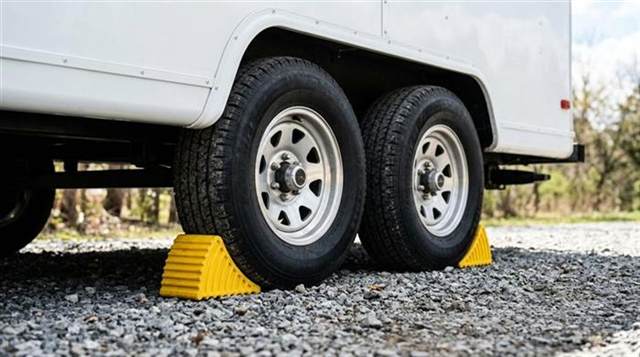
Always Chock Trailer Wheels Before Unhitching
Gravity never sleeps, parking pawls only hold your truck, and unhitching without rated wheel chocks can send a…
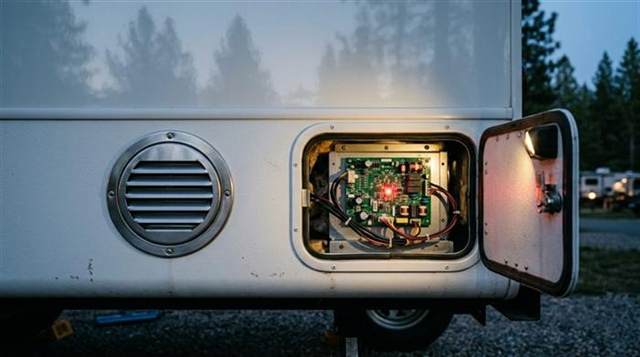
Suburban RV Furnace 3 Blinks
First: If you smell propane, hear hissing, have an active propane or CO alarm, or anyone feels dizzy, headachy, or…
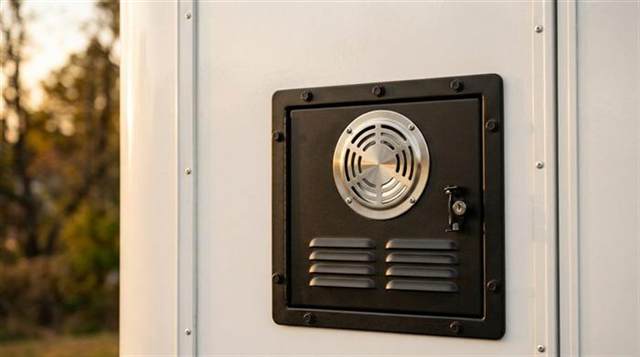
Furrion Tankless Water Heater E1 & E2 Error Codes
First: If you smell propane, hear hissing, have an active propane or CO alarm, or anyone has CO symptoms…
Oliver Travel Trailers
An aircraft-style-grade double-hulled fiberglass yacht on wheels engineered for people who find Airstreams…