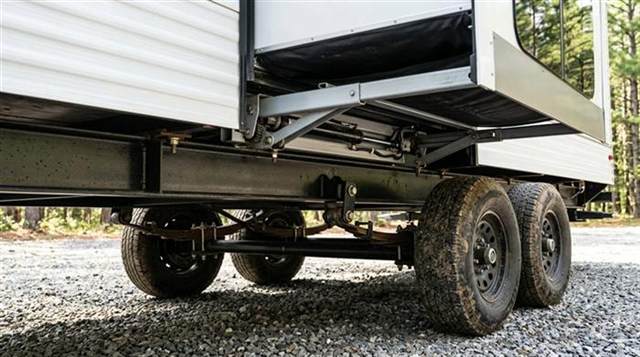
Walk down the back row of any used RV consignment lot and you will spot terrifying soccer-ball-sized blisters bulging out of smooth fiberglass sidewalls—the dreaded RV cancer known as wall bubbling. Azdel composite wall panels win overwhelmingly over classic tropical Luan plywood inside vacuum-bonded layered fiberglass walls: Azdel is 100-percent impervious to water rot, mold, and mildew, weighs fifty percent less than wood, emits zero formaldehyde, and doubles sound/thermal wall foam. Luan only survives today on entry-level glued-layer trailers or classic builders saving roughly four hundred to eight hundred dollars per trailer—a false economy smart buyers avoid.
01 • 6-Factor Comparison TableSide-by-Side Specs
| Factor | Azdel Onboard Composite | Luan Wood Substrate | Edge |
|---|---|---|---|
| Water & Rot Immunity | Polypropylene & fiberglass blend—cannot rot, swell or mold | Thin tropical meranti wood—rots and turns to mush when wet | Azdel Onboard Composite |
| Sidewall Weight Impact | 50% lighter than Luan (saves 200–500 lbs per rig) | Heavier wood fiber adds dead weight above axles | Azdel Onboard Composite |
| Wall bubbling Blister Resistance | Maintains bond integrity even if minor window seal weeps | Wood fibers split apart when damp, creating outer wall bubbles | Azdel Onboard Composite |
| Cabin Odor & Air Quality | 100% formaldehyde-free and odorless in summer heat | Imported plywood adhesives off-gas "new RV smell" VOCs | Azdel Onboard Composite |
| Thermal & Acoustic wall foam | Roughly 2x R-value of Luan + deadens rain/generator noise | Minimal thermal value. Transmits exterior sharp noise | Azdel Onboard Composite |
| Upfront Building Cost | Adds ~$500–$900 in raw material cost per camper | Cheapest flat backing board available on Earth | Luan Wood backing board |
Key Differences
Anatomy of a glued-layer Wall—And How wall bubbling Happens
Understanding why Azdel matters requires peeling back a smooth RV sidewall like an ice-cream sandwich. Makers don’t glue glossy exterior fiberglass directly onto foam wall foam—foam alone bruises too easily from hail or elbows.
Read deeper field notes
Instead, they pinch-roll outer fiberglass onto a thin rigid backer board glued over aluminum framing and block foam. For decades, that hidden backer board was one-eighth-inch Luan—cheap tropical meranti plywood imported from Southeast Asia.
The moment rainwater sneaks past a cracked clearance light or window corner, Luan absorbs moisture like a paper towel, swells, rots, and splits apart inside, letting the outer fiberglass skin pop loose in permanent wavy blisters costing $8,000+ to rebuild.
What Exactly Is Azdel. And Can an Azdel Trailer Still Leak.?
Made in Lynchburg, Virginia, Azdel Onboard replaces wood fibers entirely with a heat-fused matrix of chopped fiberglass strands and polypropylene resin. Drop a scrap of Azdel into a bucket of boiling water for six months, pull it out, and it measures the exact same thickness without growing a single spore of black mold.
Read deeper field notes
Here is the crucial campfire truth check, though. Azdel does NOT mean you can throw away your roof caulk gun!
Water leaking past neglected roof vents can still drip onto wood bottom floors, soak bed mattresses, or short 12-volt wiring—Azdel simply ensures a minor window leak won’t total your exterior frame sidewalls before you catch it.
Single Azdel vs. Double Azdel. Reading Marketing Fine Print
Because RV shoppers started asking for "Azdel walls" by name on dealership lots, clever marketing brochures invented a sneaky half-step. Putting Azdel behind ONLY the outer fiberglass skin.
Read deeper field notes
Meanwhile, still gluing cheap wood Luan behind the interior wallpaper! Exterior-only Azdel still stops ugly exterior wall bubbles and sheds half the wood weight, which is great.
However, builders like Lance, Alliance RV, and nuCamp go "Double Azdel"—using composite panels on BOTH the exterior and interior wall faces so a leaky interior shower seam or sweating window never feeds mold behind your bedroom wallpaper either.
Weight Savings and Campground Quiet
Swapping Luan for Azdel across a thirty-foot trailer shaves roughly 250 to 450 pounds of high-mounted wall weight—raising your Cargo Carrying limit for e-bikes and water without sacrificing frame puncture resistance. Better yet, Azdel’s porous thermoplastic fiber matrix absorbs high-frequency sound waves far better than dense plywood.
Read deeper field notes
m. or acorn-sized rain pelts the side of your rig, Azdel cabins stay noticeably calmer.
Which One Should You Buy?
Choose Azdel Onboard Composite If...
- You are buying ANY flat-sided glued-layer fiberglass travel trailer or fifth wheel you plan to keep past 3 years
- You store your RV outdoors exposed to rain, snow, and freeze-thaw cycles
- You or family members have asthma, allergies, or sensitivities to formaldehyde adhesives and mold spores
- You want stronger resale confidence—used RV inspectors right away check whether layered fiberglass walls use Azdel
Choose Luan Wood Substrate If...
- You are actually buying ribbed metal aluminum Stick-and-Tin. No glued-layer fiberglass layer to peel and bubble.
- You are buying a deep-discount used rig stored its whole life inside a heated pole barn with zero wall waviness
- You are shopping heavy Oregon four-season rigs (Arctic Fox) and commit religiously to indoor storage or proactive caulking
- You inspect exterior walls at a 45-degree sunlight angle and verify rock-hard, flat adhesion everywhere
Common Questions
How can I spot wall bubbling when shopping for a used RV?
Stand at the front corner of the RV on a bright day and sight straight down the glossy fiberglass sidewall at a shallow grazing angle. Never look straight on! Any ripples, waves, or soft bubbles around windows, clearance lights, or lower skirts signal water intrusion.
Can Azdel walls still peel and bubble if factory glue failed?
While water-rot wall bubbling disappears with Azdel, exceedingly rare adhesive/pinch-roller curing defects or parking inches away from a blazing campfire/dark reflective glass building can still thermally soften laminating glue. Still, Azdel slashes wall bubbling risk by well over ninety percent.
Do molded fiberglass eggs like Casita or Oliver need Azdel?
No! Molded fiberglass eggs don’t use flat glued-layer sandwich walls at all—their thick frame marine fiberglass shells are laid directly in one-piece molds with zero Luan plywood anywhere in the walls.
Related Guides
Alliance RV
Crowdsourced by full-time RVers who begged for single water shutoff valves and carpet-free slides—and actually got…
Lance Camper
Desert-bred California build quality that survived a bumpy corporate detour and still builds smarter lightweight…
Wet Bath vs. Dry Bath in Small Campers
One waterproof fiberglass capsule that unlocks compact agility versus stepping onto a dry bathmat like a civilized…
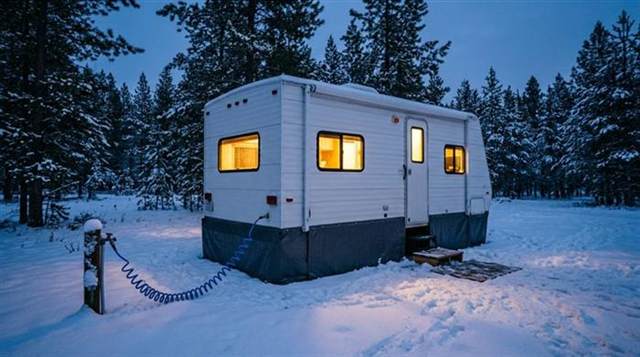
Stopping Winter RV Condensation & Mold
CRITICAL SAFETY WARNING.