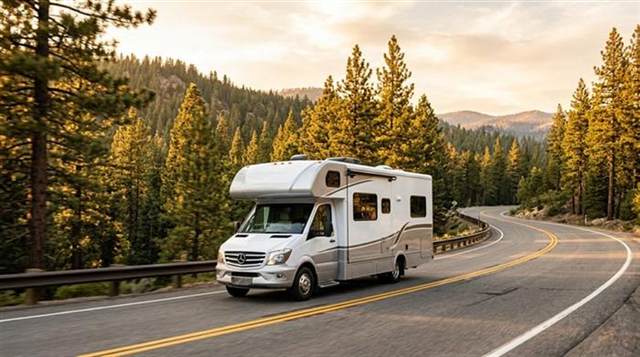
Debating a Class C motorhome against a travel trailer comes down to one fundamental rhythm question: do you road-trip fast, moving camps every forty-eight hours, or settle into basecamp for a week exploring trailheads. Class C motorhomes win for fast-moving road-trippers, families who treasure onboard bathroom and fridge access at rest stops without unhitching, nervous drivers intimidated by backing trailers, and boat/car flat-towers. Travel trailers win decisively on purchase and insurance cost, isolating engine repairs from your vacation bedroom, avoiding neglected-drivetrain rot during winter storage, and easily unhitching your pickup or SUV to go buy groceries.
01 • 6-Factor Comparison TableSide-by-Side Specs
| Factor | Class C Motorhome | Travel Trailer | Edge |
|---|---|---|---|
| Basecamp Sightseeing Mobility | Must break camp to drive to trailheads unless flat-towing a car | Unhitch in 5 minutes. Drive your truck/SUV anywhere | Travel Trailer |
| Highway Travel Day Convenience | Walk back at rest stops to use your clean toilet & make sandwiches | Climb into trailer in parking lots. Passengers ride separate | Class C Motorhome |
| Purchase, Insurance & Drivetrain Cost | $95k–$220k+ plus oil, tires, brakes & motorhome insurance | $20k–$65k. Zero second engine or transmission to maintain | Travel Trailer |
| Campsite Arrival Setup Speed | Park, tap auto-leveling button, plug in—done in 4 minutes | Unhitch WDH bars, chock wheels, level side-to-side & drop jacks | Class C Motorhome |
| Moving Breakdown Vulnerability | Blown transmission maroons your bedroom inside a truck shop | Rent or swap tow trucks and still sleep in your own bed | Travel Trailer |
| Cab-Over Sleeping & Driving Ease | Drives like a U-Haul van. Kids adore cab-over bunk caves | Requires learning reverse steering & hitch weight math | Class C Motorhome |
Key Differences
The Trailhead Problem. Groceries, Parking Lots, and Toads
Imagine arriving at Glacier National Park in a twenty-nine-foot Class C motorhome, leveling perfectly, deploying the awning, and setting out camp chairs—only to realize you forgot coffee creamer and want to drive Going-to-the-Sun Road tomorrow morning. Without flat-towing a second small car ("toad") four-wheels-down behind your motorhome, every errand means rolling everything up and driving your entire house to Safeway.
Read deeper field notes
With a travel trailer, your campsite stays untouched all week. Meanwhile, your pickup or SUV zips into national-park trailhead lots, kayaks strapped overhead.
Adding a flat-towed Wrangler or CR-V behind a Class C solves basecamp freedom beautifully—at the cost of another $4,500 in tow bars and supplemental braking hardware.
Road-Trip Velocity and Rest-Stop Sanity
Flip the itinerary to a fast-paced two-week Route 66 or Blue Ridge Parkway tour changing campgrounds every single night, and Class C motorhomes shine brilliantly. Pull onto a scenic overlook, set the parking brake, swivel the captain’s chairs around, make hot soup at your dinette, use your own spotless bathroom, and roll onward in ten minutes.
Read deeper field notes
Passengers riding in Class C dinette seats. Always verify steel-anchored seatbelts and stow loose Instant Pots before driving.
m. Takes zero sweaty flashlight unhitching.
Two Engines vs. One. Storage Lot Rot and Shop Bills
Here is the financial gut-check motorhome brochures bury in fine print. Engines hate sitting still ten months a year.
Read deeper field notes
A Ford E-450 V8 or Mercedes Sprinter diesel Class C parked from October through May still ages out six expensive big-truck tires by year six, gums up fuel injectors, drains chassis batteries, and needs big-truck-bay lifts for brake jobs. Worse, if your Sprinter throws a limp-mode emissions sensor code in Wyoming, your hotel room goes straight onto the mechanic’s lift with it.
Travel trailers carry zero engines, zero transmissions, $250 annual insurance policies, and simple Dexter wheel bearings any local trailer shop services in an hour.
The Cab-Over Bunk Warning Every Class C Buyer Must Know
If you choose a Class C, inspect that iconic cab-over sleeping nose like a crime-scene detective. On budget wood-framed Class Cs, highway wind pressure pushes rainwater past front clearance lights and side-window seals, rotting the cab-over bunk floor from the inside out before you ever spot stains.
Read deeper field notes
Prioritize builders using one-piece molded seamless fiberglass front caps or steel-cage cab reinforcements—like Winnebago View/Ekko, Tiffin Wayfarer, or Jayco/Entegra seamless-cap lines—over multi-piece seamed front noses.
Which One Should You Buy?
Choose Class C Motorhome If...
- You move campsites every 1–2 nights on sweeping cross-country highway tours
- You want stress-free driving without trailer sway or tricky reverse hitch geometry
- You travel with dogs or kids who benefit massively from onboard AC and private rest-stop bathrooms
- You already own a towable boat—or flat-towable Jeep/Subaru—you want to pull behind camp
Choose Travel Trailer If...
- You already own a capable SUV or pickup truck and hate paying to maintain a second drivetrain
- You camp 4–7 nights per stop and want an agile daily driver for trailheads and restaurants
- Your budget sits between $20,000 and $55,000 where new motorhomes simply don’t exist
- You camp six weekends a year and refuse to let a $130,000 engine lose value in storage
Common Questions
Is a Class C motorhome safer in a crash than riding in a pickup towing a trailer?
Modern steel crash-tested pickup truck cabs with curtain airbags remain far safer in highway collisions than plywood-and-fiberglass motorhome living boxes! When riding in a Class C, occupants are safest buckled into the factory Ford/Mercedes front cab seats.
Which is better on Class C motorhomes. Ford E-450 gas or Mercedes Sprinter diesel?
Ford’s Godzilla 7.3L V8 E-450 chassis offers huge payload limit (3,000+ pounds) and cheap repairs at any small-town Ford shop, burning 8–10 MPG. Mercedes Sprinter diesels deliver sleek 14–16 MPG handling, but carry tight payload limits and pricey dealer service.
Can ANY car be flat-towed four-wheels-down behind a Class C motorhome?
Definitely not—most modern automatic and CVT transmissions burn up within ten miles if towed without lubrication pumps spinning! Check official maker owner’s manuals for approved "camping flat-towable" vehicles like Jeep Wranglers, Gladiators, Ford Mavericks (Hybrid/select trims), or manual-transmission cars.
Related Guides

Winnebago
The household name your grandparents trusted, now split between brilliantly engineered Iowa adventure vans and…
Tiffin Motorhomes
Southern hospitality wrapped around handcrafted Alabama hardwood cabinets and a small-town service campground that…
Azdel Composite vs. Wood RV Walls
Why a two-millimeter sheet of polypropylene fiberglass quietly saved thousands of glued-layer campers from turning…

Your Dealership Delivery Walkthrough Plan
Why a thorough, safe Pre-Delivery checkup (PDI) with a trained RV tech beats waiting weeks for a warranty service…