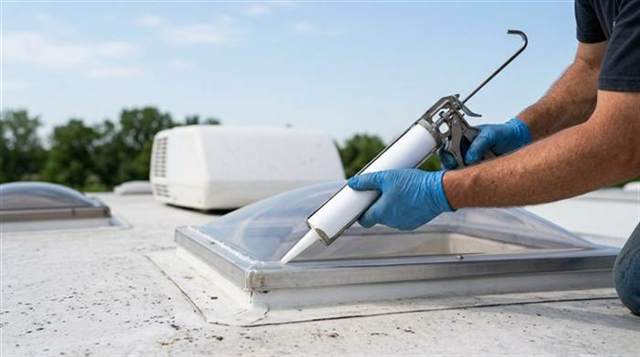
Use Dicor Lap Sealant on thin, flexible white camper roof sheets (rubber, TPO, or PVC), and save Sikaflex for hard fiberglass roofs, metal Airstream seams, or gluing solar brackets down. Dicor stays soft and stretchy so it moves with thin roof sheets. Sikaflex dries into super-strong construction adhesive that can rip thin roof sheets or trap you forever when replacing a broken vent.
01 • Reference ChartQuick Reference Chart
| Job on Your Camper | Winner | Why It Wins |
|---|---|---|
| Sealing vents & skylights on rubber/TPO roofs | Dicor Lap Sealant (or Alpha 1021 on SuperFlex) | Spreads flat like batter and stretches gently without tearing thin sheets |
| Sealing & bedding mechanically fastened brackets on hard roofs | Sikaflex (252 or 221) + Fasteners | Provides high-strength adhesive bedding alongside maker-required screws/bolts |
| Sealing seams on an aluminum Airstream or cargo trailer | Sikaflex | Grips slick bare metal way tighter than soft rubber-roof Dicor |
| Touching up small cracks next year | Dicor Lap Sealant | Fresh Dicor melts right into clean old Dicor in minutes |
| Replacing a hail-cracked skylight lid assembly later | Dicor Lap Sealant | Scrapes up cleanly with a plastic putty knife. Sikaflex fights like cement |
| Sealing vertical fiberglass nose-cap trim | Sikaflex 221 or Proflex | Stays put vertically without drooling down your paint |
Key Rules Before You Start
Soft Blanket Sealer vs Super-Strong Glue
The easiest way to understand Dicor versus Sikaflex is to think about how strong you actually want the grip to be. Dicor Lap Sealant is a soft, stretchy waterproof blanket.
Read deeper field notes
You squeeze it around plastic roof vents and screw heads on flexible white roofs, and it forms a cushy rubbery puddle that keeps water out. Sikaflex (especially popular versions like Sikaflex 221, 252, and 715) is closer to industrial windshield glue mixed with tough rubber caulk.
Boat builders, ambulance makers, and Airstream techs love Sikaflex because once it dries on fiberglass or aluminum, you could practically hang a bowling ball from it without the grip letting go.
Why Sikaflex Can Backfire on Thin Flexible Roofs
Wait — isn’t stronger always better on a camper roof. Not when your roof is a thin white sheet of rubber or TPO!
Read deeper field notes
Thin roof sheets ripple in highway wind and stretch in afternoon heat. Because Sikaflex dries much firmer than Dicor, its stiff edge can tug hard against a thin roof sheet until the sheet tears.
Even worse, plastic roof vents and skylights crack from hailstones or sun rot every five to eight years. When a skylight cracks under Dicor, you scrape the soft Dicor away with a plastic scraper in twenty minutes.
When someone glued a skylight down onto a thin roof sheet with Sikaflex, prying it up rips the roof!
Where Sikaflex Shines on Hard-Top Campers
If you drive a camper van with a painted steel roof, an aluminum horse trailer, or a Class C motorhome with a hard one-piece fiberglass roof, Sikaflex becomes your best friend. Standard rubber-roof Dicor can sometimes peel loose at the edges on slick painted metal or glossy fiberglass over several winters.
Read deeper field notes
Clean fiberglass and metal pair well with Sikaflex 221 or Sikaflex 715. Installers also use Sikaflex 252 as a frame adhesive bed under solar panel mounting brackets on hard roofs.
Still, rooftop solar brackets must always use proper metal bolts and screws into roof framing per the solar maker’s design instructions so panels never tear loose at highway speeds. Always wear disposable nitrile gloves when handling sealants — never wipe wet sealant off bare skin with mineral spirits.
Never grab random Sikaflex concrete crack filler from the brick-and-concrete aisle at a hardware store and put it on a camper! Also, never rely on adhesive alone without metal bolts and screws to hold heavy rooftop solar panels against 70-mph highway wind uplift, and never bond plastic vents onto thin TPO or rubber roofs with frame Sikaflex.
Clean & Seal Step-by-Step Checklist
Follow these steps on a dry afternoon so your patch seals tight the first time:
- Check whether your camper roof is a thin flexible white sheet (TPO, PVC, rubber) or hard fiberglass/metal.
- Pick Dicor Self-Leveling Lap Sealant for flat vents, skylights, and bars on flexible white roof sheets.
- Pick RV/marine Sikaflex (like 221 or 715) for hard fiberglass roofs, camper vans, and aluminum seams.
- Wear disposable gloves and wipe surfaces with rubbing alcohol before squeezing either tube.
- Inspect roof seams every spring and fall, touching up any lifted edges before winter rain arrives.
Common Questions
Can you put Dicor Lap Sealant on top of old Sikaflex?
No, do not layer those two products on top of each other. Dicor is designed to melt and stick tightly onto clean old Dicor, not onto dried Sikaflex glue. Scrape old failed caulk down to the bare clean roof before switching products.
How long does Dicor take to dry compared to Sikaflex?
Dicor skins over in about five minutes, turns dry to a light touch in four hours, and keeps firming up underneath for up to thirty days —. Still, light rain after four hours is fine. Sikaflex skins in an hour and dries firm in two days.
Which Sikaflex number is meant for RV roofs?
Sikaflex 715 is made especially as a semi-self-leveling RV roof sealant for metal and fiberglass campers so it settles neatly around vents. Thicker Sikaflex 221 works well on vertical wall joints and camper van roof fans. Meanwhile, Sikaflex 252 is used as an adhesive bed alongside metal bolts and screws for brackets on hard metal or fiberglass roofs.
Related Guides

Why Bathroom Silicone Ruins RV Roofs
Never put 100% household silicone caulk on an RV roof!
Dicor vs. Geocel Pro Flex Caulk
Dicor and Geocel Proflex RV are teammates, not rivals — putting them in each other’s spot causes big trouble!

Grand Design Momentum
The Grand Design Momentum proves you can haul dirt bikes or a side-by-side ATV without sleeping inside a cold…

Lance Camper
Desert-bred California build quality that survived a bumpy corporate detour and still builds smarter lightweight…