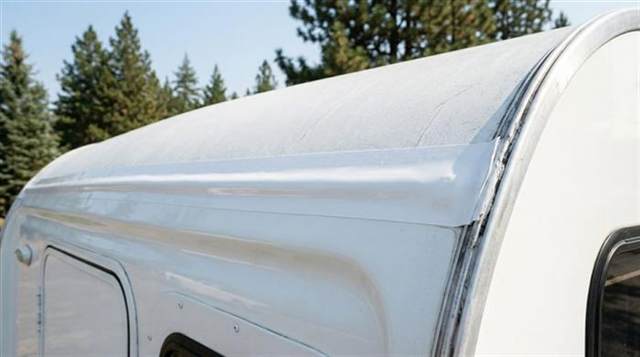
Yes, EternaBond tape sticks tightly to a PVC camper roof — the smooth, bright-white vinyl sheet that feels like a heavy-duty swimming pool liner — as long as you wipe away dirt and surface oils first. However, PVC roofs stretch and shrink slightly in hot and cold weather, and most PVC roof warranties forbid permanent tape unless you are patching an emergency tear.
01 • Reference ChartQuick Reference Chart
| Question or Task | PVC Roof Answer | What You Should Know |
|---|---|---|
| Does EternaBond grip clean PVC? | Yes — grips super tight | Wipe with rubbing alcohol first and press hard with a roller |
| Do you need primer spray on PVC? | Usually no, unless greasy | Clean PVC bonds fast, though primer helps on cold or weathered edges |
| Is PVC safe with standard Dicor caulk? | Check the tube label first | Some PVC makers require Dicor Diflex/PVC-safe caulk or Alpha 1021 |
| Fixing a puncture from a low tree limb | Best instant patch | Cut rounded corners on your tape piece so branches cannot snag corners |
| Taping every seam on a 2-year-old PVC roof | Bad idea | Voids long 15-to-20-year PVC roof warranties for no real gain |
| Removing EternaBond from PVC later | Almost impossible cleanly | Pulling it up can stretch or tear the thin vinyl roof sheet |
Key Rules Before You Start
How PVC Roofs Behave Differently Than Rubber
Picture a thick, heavy inflatable pool raft or vinyl boat seat — that is basically what a PVC camper roof is made from. Unlike older rubber roofs that shed white chalky dust down your camper walls, PVC stays bright white, bounces off summer sun, and shrugs off fallen pine needles and bird droppings without staining easily.
Read deeper field notes
Because PVC is smooth vinyl, sticky tar-backed EternaBond tape grabs onto it like superglue once you wipe off road grime. The catch is that vinyl expands slightly at noon and shrinks back tight at midnight.
If you stretch EternaBond tape tight while laying it down, it can wrinkle or pull up at the ends.
Right Way to Patch a Rip or Seam on PVC
Start by washing dirt off the spot with mild Dawn dish soap and water, then dry it completely with paper towels. Follow up with a quick wipe of rubbing alcohol to strip away road exhaust film.
Read deeper field notes
Skip harsh paint thinners that sit in puddles,. That is because strong chemicals can soften vinyl if left soaking too long.
Cut your piece of EternaBond at least two inches wider than the tear in every direction, and snip the four sharp square corners into smooth rounded curves with scissors. Rounded corners stop wind, tree twigs, and wash brushes from catching a corner edge and slowly peeling your patch back over time.
Why PVC Warranty Rules Matter Before You Tape
One big perk of owning a camper with a PVC roof is that brands like Dicor Tufflex and Alpha PVC often advertise fifteen-year or lifetime sheet warranties. Read the fine print before taping every vent on your roof.
Read deeper field notes
Covering factory caulk seams with permanent black-backed tape almost always gives the company an excuse to deny claims. An unexpected hole punched by hail or tree limbs far from home (or an older out-of-warranty rig where you are tired of scraping cracked caulk every two years) for normal yearly touch-ups on newer rigs, stick with PVC-approved self-leveling roof caulk.
The biggest mistake PVC roof owners make is sealing around EternaBond tape — or directly on the PVC sheet — with cheap hardware-store gutter caulk or oil-based black roof tar in a panic. Harsh oil chemicals slowly pull the softness right out of a vinyl PVC roof. That turns that flexible patch brittle until it cracks like an eggshell next winter and dumps rainwater into your ceiling.
Clean & Seal Step-by-Step Checklist
Follow these steps on a dry afternoon so your patch seals tight the first time:
- Wash the PVC patch area with warm water and mild dish soap, then wipe dry.
- Wipe once with rubbing alcohol on a clean cloth to remove highway grease and let it dry.
- Cut your EternaBond patch two inches past the damage and round off all four corners with scissors.
- Peel the backing paper a few inches at a time and lay the tape flat with zero pulling or stretching.
- Press hard across the entire patch using a narrow steel or wood roller, working from the center outward.
Common Questions
How do I know if my camper has a PVC roof instead of rubber?
Unscrew the plastic trim ring inside your ceiling roof vent and peek at the cut edge of the white roof sheet. PVC stays smooth and bright white on top without chalky dust, feels slightly slick like a pool float, and often shows tiny woven fabric threads underneath.
Can I walk on a PVC RV roof while applying EternaBond tape?
Check your camper owner manual first to be sure your wood roof deck is strong enough to walk on, and never step on a wet PVC roof! Wet vinyl is as slippery as an ice rink. Wear clean rubber-soled sneakers and kneel on a foam pad.
What heat do I need to apply EternaBond on PVC?
Wait for a dry, mild day above 50°F to 60°F so the micro-sealant backing bonds smoothly onto the clean vinyl under firm seam-roller pressure. Never use a heat gun, torch, or hot hair dryer on a thin PVC or TPO roof membrane, as concentrated heat can warp, blister, or melt the sheet.
Related Guides
EternaBond Rules on Alpha SuperFlex Roofs
Plain EternaBond tape often peels off an Alpha Super Flex roof — and using chemical solvents or aerosol primers on…
Dicor Lap Sealant vs. Sikaflex
Use Dicor Lap Sealant on thin, flexible white camper roof sheets (rubber, TPO, or PVC), and save Sikaflex for hard…

Grand Design Reflection
The Grand Design Reflection sits right in the sweet spot for campers moving up from a pull-behind trailer to a…
Brinkley RV
Built by industry veterans who weaponized brass plumbing fittings and square windows to embarrass every giant…