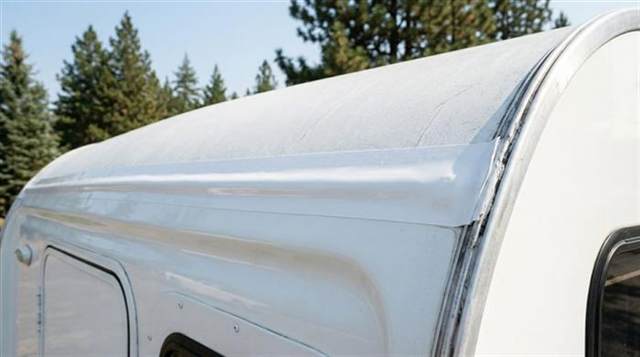
Seeing a puffy bubble on your white RV roof looks terrifying. However, do NOT poke a needle into it! Many modern TPO, Alpha, and PVC roofs expand in hot afternoon sun and puff up harmlessly — if the bubble flattens out in cool morning air and the wood underneath feels hard, leave it alone. Only repair bubbles caused by loose edge trim or squishy wet wood!
01 • Reference ChartQuick Reference Chart
| What You See & Feel | Danger Level | Right Move |
|---|---|---|
| Soft air puff in hot sun. Gone by 8 AM. Wood feels rock-hard | Harmless — Normal | Do nothing! Never poke pinholes to let air out |
| Roof sheet isn’t glued across center ("floating" PVC roof) | Harmless by design | Factory stretched it at edges only. Leave it alone |
| Metal gutter rail screw backed out & sheet edge pulled free | URGENT — Fix Today | Dry inside, re-tuck/glue edge, replace screws, seal with Dicor |
| Wood under the bubble feels spongy like wet cardboard | HIGH — Hidden Leak | Find leaking vent/seam nearby, open & dry rotten wood deck |
| Bubble right behind front bar billows huge while towing | MEDIUM — Wind Lift | Air is sneaking under front nose bar. Reseal front bar tight |
| Blistered/wrinkled spot right around wrong caulk | HIGH — Chemical Damage | Scrape wrong caulk off and patch weakened roof spot |
Key Rules Before You Start
Harmless Sun Puffs vs Dangerous Leak Bubbles
Picture wearing a loose cotton T-shirt on a windy warm day — just because the shirt puffs away from your chest does not mean anything underneath is broken! Many newer RV factories glue flexible roof sheets lightly — or stretch PVC roofs tightly only along the four outer walls — so hot ninety-degree sun makes the sheet expand into gentle pillows.
Read deeper field notes
Before losing sleep, run the Morning Test. Did yesterday’s scary foot-wide bubble shrink flat again (next, press firmly down on the plywood deck with the heel of your palm) if the wood underneath feels rock-solid with zero crunching or squish, walk back down happy!
Why Air Billowing Behind the Front Bar Needs Fixing
One kind of roof bubble DOES need quick attention even when the wood is dry. Highway wind sneaking underneath a loose front transition bar!
Read deeper field notes
If the screws along the very front edge of your roof loosen up, sixty-five-mile-an-hour highway wind blasts under that gap and inflates your roof sheet like a parachute all trip long. Left unfixed, parachute billowing stretches your white roof sheet out permanently and eventually rips it right out from under the side rain gutters.
Check every screw head under the front roof bar. If old Dicor split open or screws wiggled loose, tighten or upsize the screws into solid wood and bury the entire bar under fresh Dicor.
Fixing Loose Pulled Edges Along Side Gutter Rails
Sometimes an old EPDM rubber roof shrinks slightly after ten summers, pulling a six-inch stretch of white rubber out from behind the aluminum side gutter strip. Never just squirt silicone into the gap!
Read deeper field notes
Unscrew six inches of the side trim bar past each end of the pulled spot so you can inspect the wood edge. If the wood is dry, brush water-based RV roof glue.
Like Dicor 901BA water-based glue — never harsh chemical contact cement unless matched to your exact roof. Onto the wood, smooth the slack sheet back down if enough length remains, screw the trim bar down with fresh sticky putty tape behind it, and cap EternaBond over any short edge.
Whatever you do, NEVER slice a slit or poke a thumbtack into a puffy RV roof bubble thinking you are "burping trapped air out"! You just punched a leak hole straight through a perfectly healthy waterproof roof! And even if you glue it flat today, the next hot summer afternoon will puff the spot right next to it anyway.
Clean & Seal Step-by-Step Checklist
Follow these steps on a dry afternoon so your patch seals tight the first time:
- Check the bubble early in the cool morning before direct sun warms the roof sheet.
- Press firmly on the wood deck beneath the bubble — solid wood means dry. Spongy wood means a water leak.
- Inspect nearby skylights, vents, and the front roof bar closely for cracked caulk or backed-out screws.
- Never poke pins, slice slits, or inject hardware-store spray glue through holes in the roof sheet.
- If a side edge pulled out from under trim, re-bed the trim bar with sticky putty tape, glue, and EternaBond.
Common Questions
Can I inject roof glue into a bubble with a big syringe?
Please do not! Poking needle holes punches right through your waterproof roof layer, and trapped puddles of wet glue underneath an airtight vinyl or TPO sheet cannot dry out properly — which often chemically blisters and ruins the spot from below.
Why did my roof bubble up right after camping at high mountain elevation?
Just like a bag of potato chips puffs up tight when you drive up a 9,000-foot mountain pass, tiny pockets of air trapped under your glued roof sheet expand at high altitude and flatten back out down in the valley!
What is butyl putty tape and why do roof trim bars need it?
Butyl putty tape is a non-drying, chewing-gum-like gray strip tucked BEHIND metal trim rails and underneath plastic roof vents before tightening screws down. Roof caulk goes on top afterward. Meanwhile, sticky putty tape hugs every screw thread underneath as backup protection.
Related Guides
Sealing Fiberglass & Aluminum RV Roofs
Owning a camper with a hard one-piece fiberglass or aluminum roof means branches will not tear a thin rubber sheet…
Using EternaBond Tape on TPO RV Roofs
Yes, EternaBond tape can seal rips and leaky seams on a thin white flexible roof sheet (called TPO).

InTech Sol
Built inside a big-truck race-trailer factory with a fully welded aluminum cage, the inTech Sol Horizon, Dusk, and…

Airstream
Three thousand hand-buckled rivets wrapped around the exact same Dometic appliances that break inside trailers…