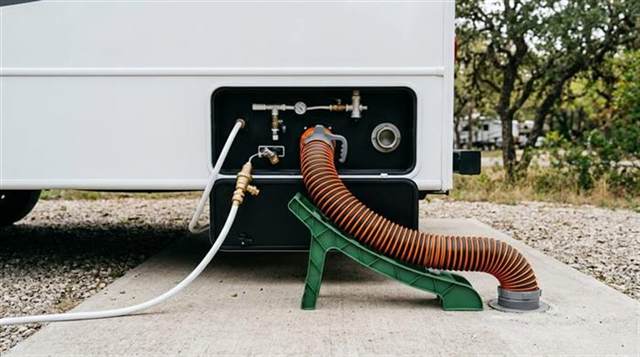
You pulled into a gorgeous full-hookup site on Lake Michigan seven days ago, connected your brand-new sewer hose to the ground pipe, and proudly pulled both the gray and black gate handles wide open "so everything drains on its own just like a house." All week long, life felt effortless—until Friday afternoon, when stepping on the toilet pedal produced an ominous submarine burp, nothing went down the chute, and peering through the flapper with a flashlight revealed a dry, petrified papier-mâché mountain peak staring right back up at your eyebrows.
01 • Field BreakdownHow It Happens & How to Prevent It
The Brutal Physics of Gravity vs. Toilet Paper
Home-size toilets sit over smooth porcelain traps swept clean by gallons of city water every single flush. An RV black holding tank is simply a flat-bottomed polyethylene tub resting underneath your bathroom floor with a three-inch exit pipe tucked off in one corner.
Read deeper field notes
Liquids run across that plastic floor and trickle straight out an open sewer valve in seconds. That leaves solid waste and bathroom tissue stranded high and dry behind them.
Day after day in warm summer weather, each dry flush lands squarely atop yesterday’s stranded pile right below the drop tube. Warm rising air from the campground sewer main drafts upward through your open hose, drying layers of tissue into a hard block affectionately known in every RV repair bay across North America as The Forbidden Pyramid—completely immune to gravity or polite negotiation.
Why Store-Bought Chemicals Cannot Melt Concrete. And Why Mixing Cleaners Is Dangerous.
Panicked rookies right away sprint to the camp store, buy four bottles of neon-blue deodorizer packets, pour them onto the dry summit, and pray for a miracle by checkout time. Unfortunately, enzyme and holding-tank treatments are engineered to keep waste suspended inside liquid.
Read deeper field notes
They are biological dispersants, not dynamite. Pouring scented treatment over a sun-baked pyramid simply runs off down the sides into an open sewer pipe.
Never reach for household drain openers like Drano, bleach, ammonia, or caustic lye, and never mix different cleaning chemicals together inside a holding tank! Mixing household cleaners or tank products can release toxic gases into your tiny bathroom, and harsh drain chemicals can damage plastic holding tanks and ruin the rubber seals inside your exterior gate valves.
Stick strictly to one maker-approved RV holding-tank product at a time and follow its label.
Safe Soaking vs. When to Call a Pro RV tech
Before doing any waste-system work, put on disposable nitrile gloves and eye/splash protection, and keep all tools dedicated strictly to rinse-only waste use. First, walk outside and push that black tank gate handle firmly CLOSED—nothing softens until water can soak around the pile.
Read deeper field notes
Add several gallons of warm (never boiling) water through the toilet using a dedicated rinse-only bucket. Never fill the tank up near the toilet rim where sewage can back up or splash into the bathroom—along with a single RV maker-approved holding-tank digestant if the label allows, and let it soak.
Never snake a garden hose through your bathroom window or connect any tank-rinsing attachment to a drinking-water hose or indoor sink faucet! High-pressure spraying down through the toilet bowl creates dangerous sewage splash, aerosols, and cross-contamination inside your living space.
If your RV came equipped with a factory built-in black-tank flush inlet on the outside wall, only use it according to your RV owner’s manual with a dedicated rinse-only hose, a backflow preventer, and the black gate valve wide OPEN whenever water is flowing. If soaking and normal dumping do not clear the blockage, stop and hire a professional RV service RV tech or mobile tank-cleaning service.
The Closed-Valve Ritual for Full-Hookup Sites
Even when paying for premium full hookups, your black tank valve should stay shut during regular use as directed by your RV owner’s manual. Before the very first person uses the bathroom on arrival afternoon, add several gallons of fresh water through the toilet bowl—enough to cover the bottom of the tank completely—plus your approved holding-tank treatment so waste never sits on dry plastic.
Read deeper field notes
Wait until the tank reaches roughly two-thirds to three-quarters full before dumping, creating a heavy wave of water behind the gate valve. Wearing gloves and eye protection, pull the black handle once so water carries solids out cleanly, close the black handle completely, and then pull your gray-water handle afterward to rinse the sewer hose.
Remove your gloves carefully and wash your hands thoroughly with soap and clean running water right away.
5 Golden Rules to Live By
| Rule # | Campground Commandment |
|---|---|
| Rule #1 | Keep the black gate valve CLOSED on full-hookup sites until the tank is ready to dump (around 2/3 to 3/4 full). |
| Rule #2 | Always prime an empty black tank with several gallons of water before anyone uses the toilet. |
| Rule #3 | Use plenty of water with every flush and follow your exact RV waste-system manual. |
| Rule #4 | Never mix household chemicals or drain cleaners, and never thread hoses through your bathroom window into the toilet. |
| Rule #5 | Wear disposable gloves and eye protection when handling waste gear, wash hands thoroughly with soap and water afterward, and call a pro if a clog persists. |
Attach a clear 45-degree polycarbonate sewer adapter onto your RV’s exterior waste outlet between the gate valves and your sewer hose! Watching the draining water transition to clear from outside—while wearing gloves and eye protection—helps you confirm when the tank is truly empty without bringing any hoses or tools inside your camper.
Campground FAQs
Can I leave my GRAY water valve open on a full-hookup site. Meanwhile, keeping the black valve closed?
Check your RV owner’s manual. Many owners close the gray valve a day before departure so they collect enough gray water to rinse out the sewer hose after dumping the black tank, and use a small dip in the hose to help block odors.
Is it safe to spray a high-pressure wand down through the indoor toilet or fill the black tank up to the toilet rim?
No! Filling a clogged black tank near the top or spraying under pressure water down through the toilet inside the bathroom risks raw sewage backup, contaminated aerosols, and splashes across your living space. Use only approved exterior tank-flush ports per your manual (with the black valve open), and call a trained RV tech if a blockage will not clear.
What personal hygiene steps should I follow after handling black tank valves or clogs?
Follow CDC waste-handling hygiene guidance. Always wear waterproof disposable gloves and eye protection against splashes, keep soiled tools completely separate from drinking-water gear, avoid touching your face, and wash your hands thoroughly with soap and clean water right away after removing gloves.
Related Guides
Protecting RV Awnings From Wind & Limbs
Why roof attachments and vinyl canopies account for so many insurance claims in campground America.
RV Black Tank Sensors Still Reading 2/3 or Full
Did you just finish dumping your black tank at the sewer hookup.
RV Hot Water Smells Like Rotten Eggs
STOP AND CHECK FIRST.

Airstream
Three thousand hand-buckled rivets wrapped around the exact same Dometic appliances that break inside trailers…