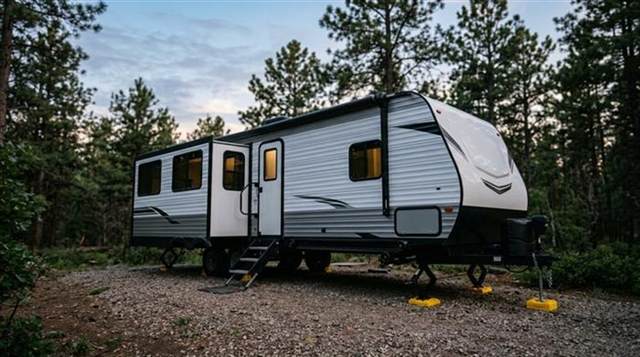
Checkout is 11:00 AM sharp, the kids are arguing over charger cords, and dark rainclouds are nudging everyone into a frantic departure scramble. You yank the wheel chocks, hop into the truck cab, pull proudly out under the campground’s rustic log entrance arch—and hear a sickening metallic CRUNCH-SCREECH overhead as your cranked-up batwing TV antenna shears cleanly off the roof, closely followed by realizing your neighbor across the loop left his awning out alone before a thunderstorm and now owns twisted aluminum.
01 • Field BreakdownHow It Happens & How to Prevent It
The strict Geometry of Tall RVs
Passenger SUVs train our brains to worry only about potholes, curbs, and bumper clearance. Meanwhile, treating the sky above our windshields as infinite open space.
Read deeper field notes
Towing a tall fifth-wheel or driving a motorhome puts vulnerable plastic skylights, air-AC unit shrouds, roof vents, and crank-up antennas hovering twelve to thirteen-and-a-half feet high—right where tree limbs and low canopies hang. Campground branches droop lower after heavy rain, and crank-up directional antennas add extra height above your AC roofline.
Hitting a low limb at road speed can tear mounting fasteners out of your roof deck and cause major water leaks. Always measure your exact loaded rig height and verify posted clearances before driving under any arch or canopy.
Why Patio Awnings Must Be Retracted Whenever alone or Windy
An electric RV patio awning stretches a wide sheet of vinyl or acrylic fabric attached to lightweight aluminum wall framing. Sudden thunderstorm gusts or shifting crosswinds create massive upward and downward lift in a split second, which can bend support arms backward over the roof or tear brackets right off the sidewall.
Read deeper field notes
Never rely on a fixed wind-speed number (such as waiting for 20-mph gusts), tie-down straps, or an automatic wind-motion sensor to protect an open awning! As awning makers like Dometic warn, you must retract and secure your patio awning whenever the RV is left alone, overnight while sleeping, or whenever wind, heavy rain, or storm clouds begin to build.
Awning Rain Pitch and the Roof Vent Travel Rule
When using your patio awning in calm, attended weather during light rain, check your exact awning owner’s manual for the approved water-shedding pitch procedure. Never force fixed arm heights if your specific model manual directs otherwise, and retract the awning completely if rain or wind intensifies.
Read deeper field notes
Before driving onto any public road, check your roof vents and covers carefully. Standard crank-open plastic ceiling vent lids can snap off their hinges at highway speeds unless closed.
Even if you install a rain-hood vent cover (such as a MaxxAir cover), always check both the vent maker’s manual and the cover’s manual to confirm whether your exact roof vent lid is actually rated to remain open during highway travel—when in doubt, crank all roof vents closed before driving.
Building an Unbreakable Departure Walk-Around Habit
Airline captains never trust memory alone during pre-flight checks, and neither should anyone towing an RV before morning coffee kicks in. Most distracted departure accidents happen the exact moment someone breaks routine—a friendly neighbor walks over to chat right when you normally retract the steps and check the roof.
Read deeper field notes
Institute the "Interrupted Checklist Restart" rule with your co-pilot. If anyone interrupts your final exterior walk-around circle for any reason, walk back to the front hitch nose and start your 360-degree visual lap over from zero—confirming stowed antennas, closed non-travel-rated vents, latched baggage doors, retracted steps, locked awning arms, and clear ground beneath the rig.
5 Golden Rules to Live By
| Rule # | Campground Commandment |
|---|---|
| Rule #1 | Measure your rig’s EXACT highest roof point with a tape measure and keep that height posted on your dashboard. |
| Rule #2 | Retract and lock your patio awning before going to sleep, whenever leaving the campsite alone, whenever wind or storms build, and before moving the RV. |
| Rule #3 | Follow your exact awning maker’s manual for setting rain pitch rather than forcing a universal measurement. |
| Rule #4 | Confirm whether your specific roof vent and vent cover are maker-rated for open highway travel—otherwise close all vents before driving. |
| Rule #5 | Have a spotter walk ahead looking UP—not just back—under shady campground tree canopies and gas station roofs. |
Keep two slit pool noodles in your front bay to snap onto low head-knocking awning arms. Meanwhile, you are sitting under the canopy in calm weather—and hang a bright red "CHECK ROOF & AWNING" reminder tag right on your steering wheel whenever an antenna is raised or an awning is extended!
Campground FAQs
Can I safely pull through regular passenger car lanes at highway gas stations with a travel trailer?
Always verify posted clearance signs before entering—many older small-town stations, bank drive-thrus, and fast-food lanes sit far too low for an RV roof and can shear rooftop ACs right off!
Do tie-down straps or waiting for a 20-mph wind threshold make leaving my electric awning out safe?
No! Do not wait for a fixed wind-speed number, and do not count on tie-down straps to save an awning. Downward gusts and wind buffeting still transfer violent loads into wall brackets and fabric seams. Always retract the awning whenever winds pick up, storms approach, or you leave the site alone.
Does adding a rain cover over a roof vent mean I can always drive at highway speed with the vent open?
Not on its own. A shroud helps block rain while parked. However, you must check your exact roof-vent and cover owner manuals to confirm whether the inner lid and lift gear are rated for open highway travel.
Related Guides
Stress-Free Campsite Backing Signals
Why five minutes of cryptic hand waving behind a thirty-foot trailer turns soulmates into courtroom rivals—and the…
RV Electric Awning Stuck Open
If your electric patio awning fails to retract from the indoor wall switch, check the safe indoor basics first.
Coleman-Mach RV AC Freezing Up
If your Coleman-Mach rooftop AC roars loudly on a humid day yet barely pushes cool air out the ceiling vents—or…
Forest River
Warren Buffett’s sprawling RV bazaar where twenty different brand stickers hide three identical floorplans and one…