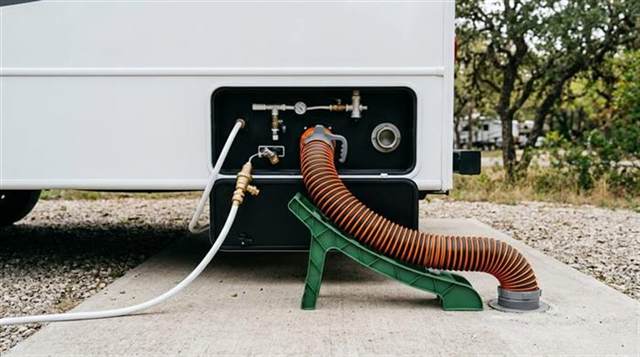
It is 11:45 AM on Memorial Day Monday at a busy state park served by a single concrete dump lane. A long queue of pickup trucks idles behind you. Rushing nervously without eye protection or a containment bucket, someone twists the sewer cap off while a gate valve is slightly ajar—and gets splashed when trapped waste escapes.
01 • Field BreakdownHow It Happens & How to Prevent It
Stage Your PPE and Gear BEFORE Rolling Up to the Drain Apron
Nothing turns a routine dump stop into a stressful traffic jam faster than pulling right beside the sewer drain and only then hunting through four storage bays for disposable gloves and sewer hoses. Before pulling onto the dump pad, get your personal protective equipment (PPE) ready per CDC waste-handling hygiene guidance.
Read deeper field notes
Put on waterproof disposable nitrile gloves and splash/eye protection (such as safety glasses), wear closed-toe shoes, and have a small utility bucket and disinfectant wipes easy-to-reach.
Check Behind the Cap Safely—And Never rig up Under Live Sewage!
Always treat your exterior sewer termination cap with caution before twisting the bayonet ears loose. Highway vibration—or someone bumping a handle—can sometimes allow liquid to seep past an aging internal gate-valve seal into the short outlet pipe right behind the plastic cap.
Read deeper field notes
First, confirm BOTH black and gray T-handles are pushed 100 percent firmly closed and place a shallow catch container or bucket beneath the outlet. Wearing gloves and eye protection, stand strictly to the SIDE.
Never kneeling face-first in front of the outlet pipe—and crack the bayonet cap a cautious fraction of a turn. If liquid begins weeping out, twist the cap right away back shut!
Do NOT yank the cap off to try pushing an add-on auxiliary valve onto a pipe that is actively holding trapped sewage without safe containment—contain any drips, verify the main valve is closed, and if a gate valve is stuck open or broken, keep the cap locked and have a trained RV tech or mobile service safely evacuate and repair the valve.
Anchor Both Hose Ends Before Touching Either T-Handle
When the outlet is clear, connect your sewer hose and make sure all four bayonet ears lock solidly onto your RV’s outlet lugs, then secure the discharge elbow firmly into the dump-station receiver pipe. If you choose to use an external add-on twist-on waste valve, install it only when the system is empty and clean, and remember that no auxiliary valve guarantees a 100% spill-free seal forever.
Read deeper field notes
Always inspect seals and wear gloves and eye protection every single time you uncap. Double-check both ends of the hose visually, pull the larger BLACK handle out smoothly first, let gravity empty the black tank completely, push the black handle firmly closed, and then pull the smaller GRAY handle so soapy gray water rinses the inside of your sewer hose before walking any remaining liquid down toward the drain.
Strict Separation of rinse-only Rinse Hoses & Handwashing with Soap and Water
" Assume that previous users touched that nozzle directly to a raw sewer elbow! NEVER connect the dump-station rinse hose to your RV’s fresh-water city inlet or fill your drinking tank with it.
Read deeper field notes
If any sewage drips onto the concrete pad during uncoupling, stop, rinse the spill directly into the dump drain using the rinse-only rinse hose, stow your waste hoses in their dedicated bumper or utility bin, peel off your disposable gloves inside-out into the trash, and right away wash your hands thoroughly with soap and clean drinking-water running water. Hand sanitizer alone does not replace washing with soap and water after handling human waste.
5 Golden Rules to Live By
| Rule # | Campground Commandment |
|---|---|
| Rule #1 | Always wear waterproof disposable gloves AND eye/splash protection whenever uncapping or handling RV sewer connections. |
| Rule #2 | Push both gate handles firmly closed, place a catch pan underneath, and crack the bayonet cap from the SIDE. If liquid weeps, close the cap right away! |
| Rule #3 | Never force off a cap holding trapped sewage to install an add-on valve without safe containment, and never trust an add-on valve to prevent all spills. |
| Rule #4 | NEVER connect the dump station’s rinse-only rinse hose to your RV’s drinking-water inlet or fresh tank. |
| Rule #5 | After removing gloves, always wash your hands thoroughly with soap and clean drinking-water running water. |
Keep a dedicated labeled plastic tub in your exterior utility bay holding 6-mil nitrile gloves, safety glasses, paper towels, trash bags, and a dedicated rinse-only catch pan so your protective gear is always in one spot and never touches your indoor living area or drinking-water hoses.
Campground FAQs
What should I do if I crack the sewer cap a tiny bit and see liquid trapped behind it?
Twist the cap right away back shut. Meanwhile, standing to the side with gloves and eye protection on! Confirm the black and gray valve handles are pushed all the way closed and use a catch container underneath. Do not pull the cap off and let raw sewage spill onto the ground. Meanwhile, trying to attach an auxiliary valve. If a main valve is failed open, keep the cap sealed and get qualified service.
Does adding an external twist-on secondary gate valve guarantee I will never have a sewer spill?
No. While an external secondary valve installed on a clean, empty outlet can add a helpful second gate outside an older valve, seals still wear out, freeze, or trap liquid between the two valves. Always wear gloves and eye protection and uncap from the side.
Is hand sanitizer enough after dumping RV holding tanks?
No. CDC guidance for handling human waste emphasizes washing your hands thoroughly with soap and clean running water right away after removing your disposable gloves.
Related Guides
Your Dealership Delivery Walkthrough Plan
Why a thorough, safe Pre-Delivery checkup (PDI) with a trained RV tech beats waiting weeks for a warranty service…
RV Black Tank Sensors Still Reading 2/3 or Full
Did you just finish dumping your black tank at the sewer hookup.
EMS Surge Protector PE2, E2 & E7 Faults
First, check which brand of surge protector you own so you do not mix up the codes!

Jayco
Middlebury’s sensible minivan of RVs—short on flashy showroom swagger, long on roof strength and a two-year safety…