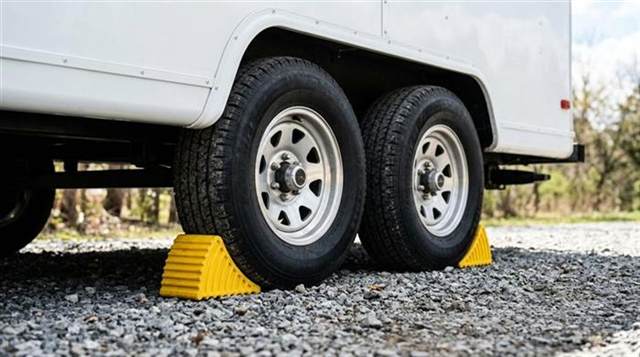
It is a hot August afternoon on the highway when a loud bang echoes from behind the tow vehicle, the trailer shudders as a tire loses pressure, and rubber debris flies into view in your side tow mirror.
01 • Field BreakdownHow It Happens & How to Prevent It
Why RV Tires Age Out Before the Tread Wears Thin
Passenger car tires often wear out their tread at fifty thousand miles while only a few years old. Camping trailer tires live a different life.
Read deeper field notes
Parked stationary in ultraviolet sunlight for months. Meanwhile, supporting heavy static weight, which can lead to sidewall weather-checking and internal degradation over time.
Check the four-digit DOT date code stamped on your tire sidewall. For example, "1823" means the 18th week of 2023, and check the actual molded speed-rating letter and load limit printed on the tire sidewall.
Never confuse Load Range (such as Load Range C, D), or E. With a speed rating.
Always look up the exact speed-rating symbol stamped on your specific tires and obey the lowest rated speed of your tire, wheel, or trailer maker manual. Follow your exact tire maker and RV owner’s manual for tire-age new intervals and checkup rules.
What to Do During a Highway Blowout
If a trailer or tow-vehicle tire blows out at highway speed, do NOT slam on the brakes and do NOT stomp on the accelerator to speed up! Following NHTSA tire blowout safety guidance.
Read deeper field notes
Grip the steering wheel firmly with both hands, steer straight ahead to stay centered in your lane, and gradually release the accelerator pedal. Allow the rig to slow down smoothly and stay under control as engine braking and rolling resistance bleed off speed.
Never fixate on a magic speedometer number like 35 MPH while fighting for control. Switch on your hazard flashers, watch your mirrors for traffic, and once the rig has slowed to a safe crawl, steer completely off the travel lanes onto a wide, flat, firm shoulder or exit area well clear of highway traffic before stopping.
Cold Tire Inflation Placards & What TPMS Sensors Actually Measure
Many highway blowouts start miles earlier as a slow puncture that drops air pressure and overheats the flexing tire carcass. Before towing in the morning while tires are cold (before driving or direct sun heats them), check every tire with an accurate gauge.
Read deeper field notes
Do NOT blindly inflate every tire to the maximum PSI number molded on the tire sidewall! Instead, inflate original-equipment tires cold to the exact PSI specified on your trailer’s federal safety/tire placard or owner’s manual, and if you have changed tire types or weighed single axle loads on a certified scale, verify the approved cold inflation pressure with the tire, wheel, and RV makers.
Adding wireless Tire Pressure Monitoring System (TPMS) sensors helps alert you to a sudden pressure loss or rising air heat inside the tire. Keep in mind how screw-on flow-through valve-cap TPMS sensors work.
As maker technical guides (such as TST) explain, cap sensors read pressure and heat at the valve stem air column. They do NOT directly measure internal wheel-bearing hub heat and cannot replace scheduled wheel-bearing checkup, repacking, and upkeep!
Roadside Safety. Use Roadside Assistance Near Live Highway Traffic
Never crawl beneath a trailer on a highway shoulder, never use light scissor stabilizer jacks to lift a trailer for a tire change, and do not assume a drive-on tandem-axle plastic ramp works safely on every suspension, tire size, or narrow shoulder! Changing a heavy trailer tire a few feet from 75-MPH semi-trucks is extremely dangerous.
Read deeper field notes
If a blowout happens along a busy highway or sloped shoulder, get everyone safely away from traffic behind a guardrail and call professional roadside assistance with big-truck safety lighting and rated lifting gear. Even in a safe, flat parking lot away from traffic, only lift an RV using lifting points, jacks, and torque limits approved in your exact RV owner’s manual.
5 Golden Rules to Live By
| Rule # | Campground Commandment |
|---|---|
| Rule #1 | During a blowout, follow NHTSA guidance. Grip the wheel firmly, steer straight, DO NOT slam the brakes or add throttle, gradually release the accelerator, and pull completely off the road to a safe flat spot. |
| Rule #2 | Inflate cold tires to the pressure specified on your trailer’s federal tire placard or owner’s manual. Do not blindly default to max sidewall PSI. |
| Rule #3 | Check the actual speed-rating symbol stamped on your tires. Load Range is not a speed rating, and follow your exact tire and RV maker’s age-new guidance. |
| Rule #4 | Use TPMS sensors to catch air leaks early. However, remember valve-cap sensors measure stem/air heat and do not replace regular wheel-bearing upkeep. |
| Rule #5 | Call professional roadside assistance for highway blowouts rather than attempting a tire change or ramp lift near live traffic or without maker-rated equipment. |
Check your trailer’s federal safety and tire placard sticker (usually on the front left exterior frame or main sidewall before every trip, log cold PSI on all tires including the spare), and keep your RV roadside assistance phone number saved in your phone favorites so you never take risks on a highway shoulder.
Campground FAQs
Should I hit the gas and accelerate if a trailer tire blows out on the highway?
No! Do not accelerate during a tire blowout. Follow NHTSA safety instructions. Hold the steering wheel firmly with both hands, steer straight in your lane, take your foot smoothly off the accelerator pedal to let the rig slow down gradually under control, and steer completely off the roadway to a safe flat area.
Should I always inflate RV trailer tires to the maximum PSI stamped on the tire sidewall?
No. Always start with the cold tire inflation pressure listed on your trailer’s federal safety/tire placard or RV owner’s manual for factory tires. Only adjust pressures if you have verified actual loaded axle weights and confirmed the exact load-inflation chart and rim ratings with both the tire and wheel makers.
Do screw-on TPMS valve-cap sensors measure actual wheel-bearing hub heat?
No (screw-on cap sensors sit at the end of the rubber or brass valve stem and measure air pressure and heat at the stem) while an overheating tire or brake can eventually warm the valve stem, cap sensors cannot guarantee advance warning of a failing wheel bearing. Always service and repack bearings on your axle maker’s schedule.
Related Guides
Unwritten Campground Etiquette Rules
Campground walls are made of canvas and thin plywood.
Lippert Under-Floor Rack & Pinion Slide Stuck
If your Lippert electric through-frame rack-and-pinion slide stops moving, keep everyone completely clear of the…
Shurflo Water Pump Cycling With All Faucets Off
If your 12V Shurflo water pump burps on every few minutes with all faucets turned off, water pressure is escaping…
Tiffin Motorhomes
Southern hospitality wrapped around handcrafted Alabama hardwood cabinets and a small-town service campground that…