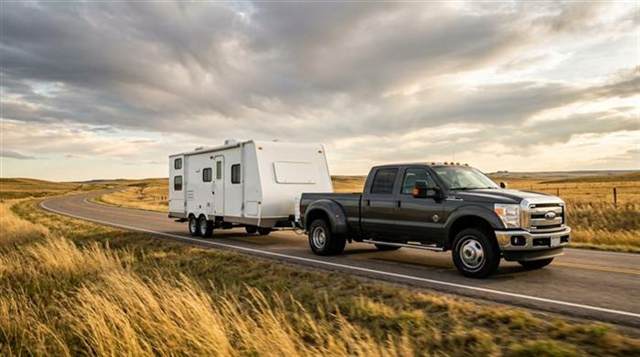
Coleman RV Quick Specs
| Specification | Field Audit Details |
|---|---|
| Corporate Parent | Licensed Brand (Historically Thor / Dutchmen & Keystone; Partner Plants by Model Year) |
| Factory Headquarters | Goshen, Indiana |
| Rig Classes Produced | Travel Trailers, Destination Trailers |
| Primary Build Architecture | Stick & Tin |
| Street Price Tier | $ (Gateway Rig) |
Real-World Reputation: Coleman RV
First, let’s clear up a campsite myth. The legendary outdoor gear company that built your dad’s super-tough green camp stove does not build Coleman RVs.
Read deeper field notes
Coleman licenses its nostalgic badge for exclusive distribution through nationwide giant Camping World—in the past built by Dutchmen and Keystone under Thor Industries, with recent model-year production also sourced across partner plants (including Forest River on select lines). Always check the federal VIN safety label on the specific trailer for the exact building entity and model year.
Nobody buys a Coleman Lantern LT 17B expecting heirloom mahogany joinery, and pretending otherwise misses the entire point. For thirteen to eighteen thousand dollars on sale, a young family tired of sleeping in leaky nylon tents gets AC, two bunk beds, a flush toilet, and dry mattresses.
Yes, the walls are wood studs wrapped in ribbed metal tin, cabinet stiles are stapled thin lumber, and single-axle models skip shock absorbers. Buy a Coleman RV if you camp five state-park weekends a summer within two hours of home, pay cash or put hefty money down so steep value drop never traps you underwater on a twelve-year loan, and commit to religious annual roof caulking.
Skip it for full-time living, rough gravel off-grid camping, or high-pressure finance-office extended warranty markups that double the trailer’s true price.
Frame, Walls & Plumbing
Frame, Axles & Suspension
Entry-spec Lippert cambered steel I-beam chassis riding on single or tandem leaf-spring axles with standard bias-ply or entry radial Castle Rock/Westlake tires that smart owners upgrade by year two.
Sidewalls, Insulation & Roof
Classic stick-and-tin wood-framed walls (16 inches on center) clad in painted ribbed metal aluminum siding with fiberglass batt wall foam, OSB/wood decking, and standard TPO roof membranes.
Plumbing, 12V & Appliances
Minimalist plastic water runs, small 3-to-6-gallon water heaters or entry tankless units, side-mount or non-ducted roof ACs on compact 17-footers, and basic WFCO 30-amp converters.
Four-Season Insulation Honesty
Strictly a warm-weather summer and early-autumn rig—exposed or minimally enclosed tanks, thin single-pane windows, and wood framing make freezing temps an invitation to burst fittings.
Pros & Known Headaches
✓ Where Coleman RV Shines
- Unbeatable entry ticket—new warrantied bunkhouse campers often sell for the price of a used golf cart
- Simple stick-and-tin single-axle 17B/17R models weigh ~3,000 pounds dry (~4,000 pounds max loaded weight), pairing with tow vehicles whose payload, axle, and hitch ratings cover their fully loaded weights
- Shared Indiana supplier parts mean basic new parts are easy to source nationwide
- Zero intimidating multiplex touchscreens—every switch, fuse, and manual stabilizer jack is dead-simple DIY
✕ Known Headaches & Failure Points
- Mega-dealer F&I finance offices famously try padding low sticker prices with thousands in prep fees and paint coatings
- Wood bottom floors and wood wall studs rot rapidly if butyl window tape or Dicor roof caulk cracks
- Wall-mounted or non-ducted 13.5k BTU AC units on entry 17-foot trims roar loudly right beside the bed
- Steep first-year value drop punishes buyers who roll zero-down loans over 120 to 180 months
10-Minute Lot Checklist
Never sign closing paperwork before inspecting the exact VIN on the lot. Check off each item below during your walkthrough:
- Run the exact 17-digit VIN through the NHTSA Recall Database (https://www.nhtsa.gov/recalls) and check the federal VIN safety label near the front left corner to identify the exact maker. Dutchmen, Keystone, Forest River, etc, and verify zero open safety recalls
- Check the trailer’s max loaded weight and estimated loaded tongue weight—plus all passengers, cargo, fuel, and hitch weight. Compare that total against your truck’s door-jamb payload sticker, axle ratings, and tow limits
- Refuse to sign loan documents until you physically inspect YOUR exact VIN unit. Never sign paperwork before the walkthrough
- Scrutinize the buyer’s order line-by-line to strike bogus $2,500 "freight/prep/battery" add-ons inflating advertised sale prices
- From a stable ladder (without climbing onto an untested roof), inspect roof Dicor lap sealant around every plumbing stack, vent lid, and front edge bar
- Look under the dinette and bed deck to check plastic water crimps, verify posted bunk weight-limit labels, and inspect furnace duct hose clamps
- Check tire pressure cold and torque lug nuts to the maker’s spec with a calibrated torque wrench before pulling onto the interstate
Popular Floorplans
Coleman Lantern LT 17B
Sweet Spot: The undisputed champion of sub-$16,000 family camping—queen bed, two kids’ bunks, dinette, and dry bath under 22 feet.
Watch Out For: Single axle with zero spare-tire mount on base trims—buy a matching spare wheel and tire before trip one, and compare max loaded weight and tongue weight against your tow vehicle’s payload and hitch stickers.
Coleman Lantern LT 17R
Sweet Spot: Couples version of the 17B swapping bunks for a spacious rear bathroom and extra wardrobe closet.
Watch Out For: Small fresh and gray tanks fill fast when off-grid camping away from campground bathhouses.
Coleman Light / Lantern 263BH
Sweet Spot: Upgraded tandem-axle glued-layer or smooth-sided family bunkhouse with slide-out space and ducted ceiling AC.
Watch Out For: Much heavier than the 17B—verify your truck’s door-jamb payload sticker, axle weight limit, max loaded weight, combined weight limit, and hitch ratings once loaded tongue weight, passengers, bikes, and coolers are added.
Coleman Lantern LT 17B: Common Issues & Lot Checks — TRAVEL TRAILER WATCH
Forest River vs. Keystone Compared — Warren Buffett’s multi-badge RV empire squares off against Thor’s design-savvy Goshen juggernaut.
Coleman RV FAQs
Who actually manufactures Coleman RVs?
Coleman licenses its outdoor brand name rather than operating its own RV factory. In the past built by Dutchmen and Keystone under Thor Industries for Camping World, recent model-year Coleman RVs have also been sourced across partner plants (including Forest River on select lines). Always check the federal VIN safety label on the driver-side front corner of the specific trailer to confirm the exact building entity and model year.
Why is the Coleman Lantern 17B advertised so cheap at Camping World?
The 17B is built at massive volume using simplified stick-and-tin materials, single axles, and streamlined options to serve as a loss-leader magnet. It is truly decent value if you reject overpriced finance add-ons and inspect roof seams yourself.
How long will a budget Coleman travel trailer realistically last?
Water—not mileage—kills budget trailers. Stored uncovered with neglected roof caulk, any wood-framed trailer can rot in four years. Stored under a breathable cover with annual $30 Dicor sealant touch-ups and greased wheel bearings, a Coleman easily delivers ten-plus summers.
Related Guides
Coleman Lantern LT 17B
Advertised online at jaw-dropping doorbuster prices, the Coleman Lantern LT 17B has put more first-time families…
30-Amp RV Shore Power Plug Melting or Burning at
FIRST.

Camping & Towing in Rhode Island
Forty-eight miles tall, thirty-seven miles wide, four hundred miles of salty coastline, and zero patience for…