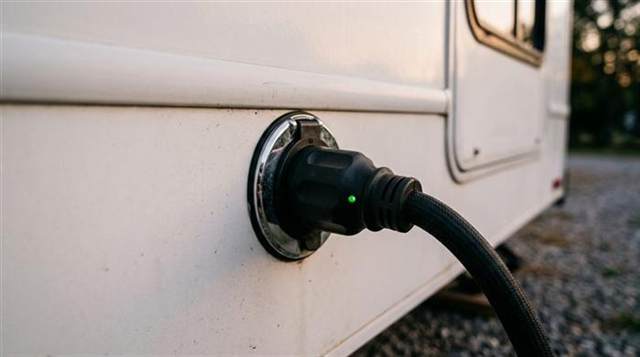
FIRST. If you see active smoke, flames, or electrical sparking/arcing at the campground power post or RV inlet, STAY BACK, evacuate everyone from the RV, and call 911 and campground staff right away. Do not reach for a burning or arcing cord or metal power post box! If there is no active fire or arcing and it is safe to approach, turn off heavy 120V loads, switch the power post circuit breaker completely OFF, and wait until the plug and power post have cooled completely before unplugging. Do NOT attempt a DIY plug cut-and-splice repair, do NOT reuse a charred plug. Do NOT try another outlet on the same overheated power post—have a trained RV tech replace the damaged cord/inlet and have a licensed electrician inspect the power post.
01 • Fault Specs & Root CauseFault Summary
| What to Know | Details |
|---|---|
| Screen Code / Blink Pattern | THERMAL ARC |
| Appliance Maker | Shore Power |
| Camper System | 12V & Shore Power |
| How Urgent Is It? | If Smoking or Arcing. Stay Back & Call 911! |
| Basic Tools Needed | Flashlight. Do NOT touch active smoke/fire/arcing or attempt DIY plug splicing. |
What Is Happening Inside the Unit
A standard 30-amp RV shore connection (NEMA TT-30) carries high continuous current through flat brass blades mated into spring clips inside an outdoor campground power post. When power post contacts become worn, loose, or corroded—or when a twist-lock RV inlet is loose or damp—wiring resistance builds at the contact point, generating intense heat without necessarily exceeding 30 amps or tripping the overload circuit breaker.
Read deeper field notes
Sustained heavy 120V loads (such as running a rooftop AC unit at the same time with an electric water heater element or other high-wattage appliances). Accelerate heat from loose prongs at a worn connection, melting the plug housing, adapter, or power post outlet.
Step-by-Step Fix
If There Is Active Smoke, Fire, or Arcing: Stay Back & Call 911 Immediately
Never grab or touch a smoking, flaming, or actively arcing power cord, surge protector, or metal campground power post! Move everyone to a safe distance, call 911, and notify campground management right away so power can be isolated at the main power post.
When Safe (No Smoke/Arcing). Shut Off the power post Breaker & Let Everything Cool Completely
If there is no active fire, smoke, or arcing and the power post breaker handle is safe to touch, turn off your RV’s heavy 120V appliances, flip the campground power post breaker completely OFF, and wait until the plug, adapter, and outlet are completely cool to the touch before unplugging. Do not rely on a fixed 2-minute timer—overheated terminals can stay dangerously hot much longer.
Take Any Melted Cord, Adapter, surge protector, or RV Inlet Out of Service right away
Once cooled and unplugged, inspect the plug blades, any adapter/surge protector, the power post outlet (also, your RV’s sidewall power inlet with a flashlight) if you see melted plastic, charring, pitting, or discoloration on any part, take it out of service right away. Do NOT attempt to scrape char off the blades or perform a DIY cut-and-splice plug new—have a qualified RV tech or electrician replace the damaged cordset or RV inlet.
Report the power post to Campground Staff. Do Not Use Other Outlets on the Same Post.
Never plug a new cord or adapter into a power post outlet that overheated. Do not switch over to a 20-amp or 50-amp outlet on the same damaged power post! Heat damage and loose feeder/neutral lugs inside an overheated power post box can affect the entire post. Report the damaged power post to campground management so a licensed electrician can repair it.
Manage 30-Amp Loads Safely & NEVER Run Portable Space Heaters While Sleeping
Once your cord and power source are professionally repaired and verified safe, avoid stacking continuous heavy 120V loads on a 30-amp service. Most importantly, per U.S. Consumer Product Safety Commission (CPSC) portable heater safety guidance. NEVER run a portable electric space heater overnight. Meanwhile, sleeping or leave it alone—even on a "Low" setting! Always turn portable heaters completely OFF before going to bed or leaving the room.
NEVER reach for an actively smoking, burning, or arcing plug or power post. Never rely on a 2-minute wait before touching overheated wiring parts. Never perform a DIY cut-and-splice repair on a melted shore cord. Never try another outlet on the same damaged campground power post. NEVER run a portable electric space heater while sleeping or alone (even on low wattage).
Stop & Call a Repair Tech When: Call 911 Immediately for any active electrical fire, smoke, or arcing. Have campground management send a licensed electrician to repair any overheated power post, and have a qualified RV tech replace any melted campground power cordset, twist-lock RV hull inlet, or damaged transfer switch/breaker wiring before plugging back into campground power.
Spare Parts to Carry
- Flashlight for inspecting power post outlets and cord prongs before plugging in (breaker OFF)
- Listed 30-amp RV wiring Management System (surge protector) with intact, clean prongs
- Class ABC / wiring-rated fire extinguisher mounted inside the RV near the exit door
Common Questions
Is it safe to run a portable electric space heater overnight on the LOW (750W) setting in my RV?
No! Per U.S. CPSC Portable Heater Safety guidance, you must NEVER operate a portable space heater. Meanwhile, sleeping or leave it alone, regardless of whether it is set to high or low. Always turn portable electric heaters completely OFF before going to bed or leaving the RV, and added continuous heater loads also increase overheating risk on RV shore cords and daisy-chained outlets.
If the 30-amp socket on my campground power post melted my plug, can I just replace the plug end myself and use the 20-amp or 50-amp outlet on the same post?
No. Both the melted cord end and the overheated campground power post have suffered thermal damage. Do not rig up a field cut-and-splice repair or plug into another outlet on the same overheated power post—have a licensed electrician inspect and repair the power post and have a trained RV tech replace the damaged RV shore cord or inlet.
Why should the campground power post breaker be turned OFF before plugging in or unplugging a healthy cord?
Plugging in or unplugging a shore cord. Meanwhile, appliances are drawing current creates wiring arcing across the brass blades and outlet contacts, which pits the metal and increases contact resistance over time. Always verify the power post is undamaged, turn the breaker OFF before connecting or disconnecting. Never touch a power post that is hot, smoking, or damaged.
Related Guides
WFCO RV Converter Not Charging Battery
Your 120V outlets work on campground power, yet your 12V cabin lights are dimming and your house battery is not…
RV GFCI Outlet Keeps Tripping in the Rain
If an RV GFCI outlet trips during rain, treat it as an active electric shock warning.
3-Valve RV Water Heater Bypass Chart
Hidden behind an indoor wood cabinet panel on the back of your 6-gallon hot water tank sit three plastic or brass…
Unwritten Campground Etiquette Rules
Campground walls are made of canvas and thin plywood.