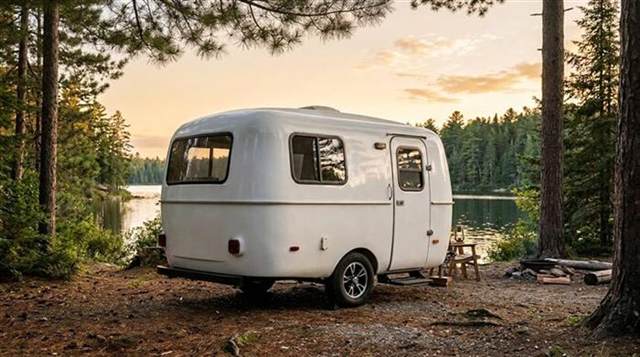
Choosing between a Casita and a Scamp is like choosing between two stubbornly reliable 1990s pickups that refuse to lose value. Both use lightweight, factory-direct molded fiberglass shells that outlive wood-framed trailers by decades, and both keep you well below $35,000. Casita wins for midsize SUV owners wanting a slightly heavier, more refined highway cruiser with a completely wood-free fiberglass floor pan and plush marine wall carpet. Scamp wins for true minimalists driving smaller crossovers who need sub-2,000-pound 13-foot featherweights, love real birch cabinet doors, or dream of towing Scamp’s iconic 19-foot mini fifth wheel behind a midsize pickup.
01 • 6-Factor Comparison TableSide-by-Side Specs
| Factor | Casita Travel Trailers | Scamp Trailers | Edge |
|---|---|---|---|
| Bottom floor build | Molded fiberglass tub sections over steel frame | Marine-treated undercoated plywood floor | Casita Travel Trailers |
| Lightest Towable Option | 17-foot models (~2,480 lbs dry) | 13-foot models (~1,500–1,800 lbs dry) | Scamp Trailers |
| Interior Wall & Cabinet Vibe | Fuzzy marine carpet walls + molded fiberglass doors | Wipeable Ensolite foam + warm birch wood doors | Scamp Trailers |
| Layout Variety | 17-foot bumper-pull floorplan variations only | 13-foot, 16-foot, and 19-foot mini fifth wheel | Scamp Trailers |
| Highway Ride & Axle Options | Dexter rubber-cushioned axle + factory High-Lift option | Rubber-cushioned axle on lighter C-channel steel frame | Casita Travel Trailers |
| Resale Value Retention | Retains ~85–95% of factory price after 5 years | Retains ~85–95% of factory price after 5 years | Tie |
Key Differences
Shell & bottom floor. Fiberglass Tub vs. Treated Plywood
From twenty paces across a state-park loop, both eggs look like fraternal twins joined horizontally around the waist by a riveted belly band covered in vinyl trim. Underneath, however, Casita hides a decisive long life trump card.
Read deeper field notes
Its lower fiberglass shell curves inward to form waterproof fiberglass floor pans, especially inside the wet bath. That leaves virtually zero frame floor wood exposed to road spray.
Scamp sets its upper and lower fiberglass body onto a marine-treated, asphalt-undercoated plywood bottom floor bolted to a steel chassis. Maintained properly with fresh undercoating around the wheel wells and entry step every couple of summers, a Scamp floor lasts thirty years—but neglected owners in rainy climates can eventually face soft outer edge corners that Casita owners never worry about.
Interior Aesthetics. Fuzzy Velcro Carpet vs. Elephant Skin & Birch
Step inside a Casita and your knuckles brush gray fuzzy hull carpet glued directly across the walls and ceiling. Critics joke it looks like the inside of a 1994 subwoofer box.
Read deeper field notes
Still, that carpet absorbs campground chatter, prevents icy morning condensation drips, and lets you stick hook-backed Velcro organizers anywhere without drilling a single hole into fiberglass. Scamp counters with dimpled ivory Ensolite closed-cell foam wall foam—lovingly nicknamed "elephant skin"—paired with genuine stained birch cabinet doors and drawer fronts.
Ensolite wipes clean easily when bacon grease splatters near the stove, and real wood doors lend Scamp a warm north-woods cabin soul compared to Casita’s glossy molded fiberglass locker hatches.
Tow Vehicle Math. Crossovers vs. Midsize SUVs
Because Casita dropped its tiny 13-foot and 16-foot molds years ago to standardize solely on 17-foot trailers, real-world loaded travel weights hover around 3,100 to 3,500 pounds with roughly 400 pounds on the hitch ball. That rules out compact crossovers and lands squarely in Toyota Highlander, 4Runner, Ford Ranger, or Chevy Colorado territory.
Read deeper field notes
Always verify your specific vehicle's door-jamb payload sticker and hitch receiver rating against actual loaded scale weights. Scamp still builds the featherweight 13-foot egg, letting properly rated crossover or midsize SUV drivers join the hard-sided camper club if they pack smartly and verify loaded tongue weight.
At the opposite end of Scamp’s catalog sits the 19-foot Deluxe Fifth Wheel, which mounts a 2-inch ball hitch inside a pickup bed over the rear axle to reduce bumper-pull tail wag—though it remains a high-profile trailer that can still be pushed sideways, destabilized, or overturned by strong crosswinds. So always check wind warnings and delay travel in dangerous gusts.
Factory-Direct Buying. Rice, Texas vs. Backus, Minnesota
Neither builder bothers with middleman RV dealerships. This means zero finance-manager ambushes or mysterious four-thousand-dollar "freight and prep" surcharges.
Read deeper field notes
Buying a Casita means placing an order with Rice, Texas, and either road-tripping south of Dallas for orientation or hiring Casita’s regional delivery driver to meet you along a major interstate route. Buying a Scamp sends you—either physically or via transport truck—to pine-lined Backus, Minnesota, where the Eveland family hands over keys right near Paul Bunyan lake country.
Build waitlists fluctuate between three and twelve months depending on seasonal demand, which conveniently explains why impatient buyers pay near-new prices for used ones online.
Which One Should You Buy?
Choose Casita Travel Trailers If...
- You want a wood-free fiberglass tub floor and molded shower basin that road spray can never rot
- You tow with a 5,000-pound-rated midsize SUV or pickup and appreciate the factory High-Lift rubber-cushioned axle
- You love quiet acoustics and sticking Velcro storage pouches directly onto carpeted interior walls
- You live closer to Texas than northern Minnesota for factory pickup or rare fiberglass repair work
Choose Scamp Trailers If...
- You drive a 3,500-pound-rated crossover and especially need a sub-2,000-pound 13-foot hard-sided camper
- You prefer warm birch wood cabinet doors and wipe-clean Ensolite foam over fuzzy wall carpet
- You own a properly rated pickup and want Scamp’s 19-foot mini fifth wheel for over-the-axle hitch stability. While still obeying wind warnings and payload limits.
- You love ultra-simple, analog 1970s moving charm that any screwdriver can fix in ten minutes
Common Questions
Which fiberglass trailer has more interior standing headroom, Casita or Scamp?
Both hover right around six feet one inch to six feet two inches depending on roof AC shroud placement. Still, modern Casita 17-footers feel marginally taller along the main galley aisle than 13-foot and 16-foot Scamps. Shoppers over six-foot-two usually step up to an Escape or Oliver.
Are Casita or Scamp trailers good for winter camping?
Both keep cabins toasty down into the twenties using their propane furnaces, and neither suffers metal-stud condensation like aluminum trailers. However, both hang uninsulated holding tanks and drain pipes underneath the frame. So water systems must stay winterized whenever temps drop below freezing.
Why don’t Casita and Scamp sell through regular RV dealerships?
Selling factory-direct keeps sticker prices roughly thirty percent lower by cutting out dealer floorplan interest and salesperson commissions. Because demand routinely matches factory output in Texas and Minnesota, neither family-owned builder needs dealership lots.
Related Guides
Casita Travel Trailers
A lovable Texas Tupperware container lined in fuzzy boat carpet that refuses to leak, lose value, or fit anyone…
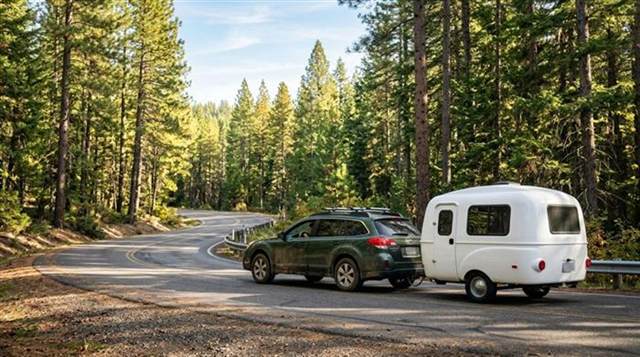
Scamp Trailers
Third-generation Minnesota charm where 1978 design perfection meets Ensolite foam walls and the cutest mini fifth…
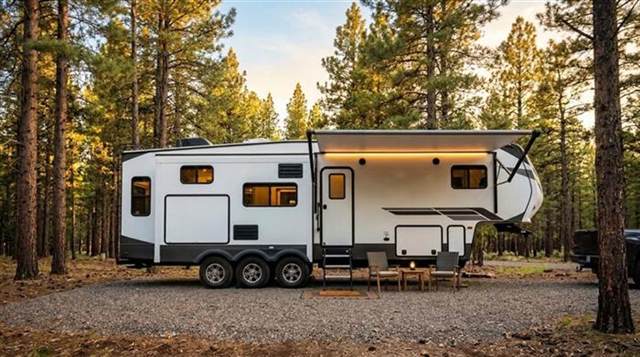
Grand Design vs. Brinkley RV Compared
The reigning mainstream champion faces off against its own original co-founders armed with brass plumbing and zero…
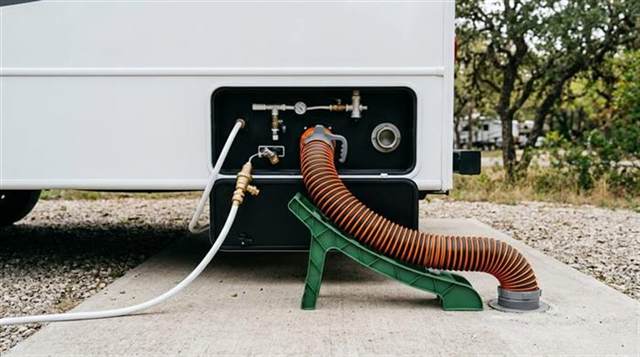
Preventing the RV Black-Tank Pyramid
Treat your RV holding tank like a home-size flush toilet for one week, and you will construct an unmovable…