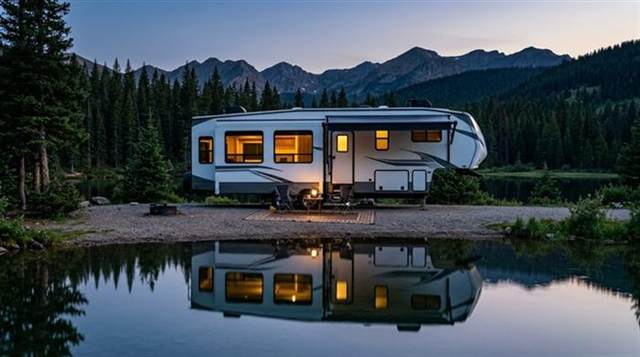
Every long-distance camper eventually faces the great towable fork in the road: bumper-pull travel trailer or gooseneck-cousin fifth wheel. Fifth wheels win hands-down on highway towing stability, apartment-grade ceiling heights, cavernous drop-frame basement storage, and shorter overall bumper-to-bumper rig length per square foot—because five feet of bedroom tucks neatly over your pickup bed. Travel trailers win on tow-vehicle flexibility (SUVs and half-ton pickups welcome), lower upfront purchase cost, keeping your covered pickup bed free for generators and firewood, and fitting beneath low-hanging trees in historic national parks.
01 • 6-Factor Comparison TableSide-by-Side Specs
| Factor | Fifth Wheel | Travel Trailer (Bumper Pull) | Edge |
|---|---|---|---|
| Crosswind & Semi-Truck Sway Stability | Kingpin sits over rear truck axle—reduces conventional side-to-side sway. Still vulnerable to high winds. | Hitch hangs 4 feet behind axle—requires WDH sway bars | Fifth Wheel |
| Tow Vehicle Requirement | Demands 3/4-ton (2500) or 1-ton (3500) pickup payload | Works from crossovers up through half-ton & HD trucks | Travel Trailer (Bumper Pull) |
| Exterior Storage limit | Massive tall drop-frame basement bays swallow kayaks/grills | Modest front pass-through tunnel under queen bed | Fifth Wheel |
| Pickup Truck Bed Usability | 180-lb fifth-wheel hitch monopolizes the truck bed | Truck bed stays 100% free under a tonneau or camper shell | Travel Trailer (Bumper Pull) |
| Interior Ceiling Height & home-size Feel | 8-to-9-foot main ceilings, kitchen islands & home-size stairs | Flat 6'6"–7'0" ceilings keep rooms feeling more compact | Fifth Wheel |
| Purchase Price & Campground Clearance | Higher MSRP + 12'6"–13'5" roof height snags low branches | Lower MSRP + lower 10'–11'6" profile fits state-park loops | Travel Trailer (Bumper Pull) |
Key Differences
Towing Physics. Why Lever Arms Matter in Wyoming Winds
Picture holding a forty-pound kettlebell close against your chest versus holding it straight out at arm’s length—that is the moving difference in pivot leverage between a fifth wheel and a bumper-pull trailer. Because a fifth wheel’s kingpin locks into heavy steel jaws directly above your truck’s rear axle, it reduces bumper-pull tail wag behind the rear bumper.
Read deeper field notes
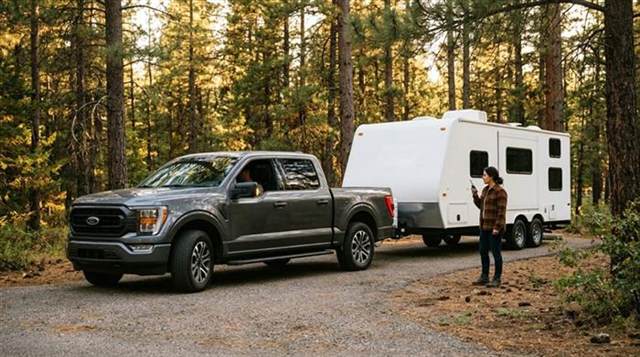
However, fifth wheels are tall, high-profile vehicles that can still be pushed sideways, destabilized, or blown over by strong crosswinds and passing-truck gusts! A travel trailer rests on a 2-5/16-inch ball hanging four feet behind your rear bumper, creating a long lever arm that demands properly adjusted weight-distribution and sway-control hardware.
Regardless of which hitch you tow, no hitch geometry eliminates wind or rollover risk and there is no universal safe wind speed. Always check National Weather Service and state DOT wind warnings, reduce speed, and delay travel or pull off the highway when winds are dangerous.
The "Half-Ton Towable" Myth That Traps Buyers
" belong in the fiction aisle right beside Bigfoot sightings. While a travel trailer puts roughly 12 to 13 percent of its weight onto your hitch ball, a fifth wheel drops 18 to 22 percent of its loaded weight straight onto your truck bed.
Read deeper field notes
Meaning even a "lightweight" 10,000-pound fifth wheel drops 2,000 pounds of pin weight plus a 175-pound hitch onto your axle. Check the yellow tire-and-loading sticker inside most crew-cab F-150, Ram 1500, or Silverado 1500 doors and you will find just 1,450 to 1,850 pounds of total legal payload—before your spouse, kids, and golden retriever climb aboard!
Realistic fifth-wheel life starts with a three-quarter-ton 2500 or one-ton 3500 truck.
Backing Geometry, Tight Turns, and Overhead Branches
Paradoxically, a 34-foot fifth wheel is noticeably easier to back into a tight curved campsite than a 30-foot travel trailer. Because the pivot point sits inside your bed, the fifth wheel responds smoothly without snapping jackknife-fast, and roughly five feet of trailer overlaps your truck bed, shortening total bumper-to-bumper ferry and gas-station length.
Read deeper field notes
Look upward, however, and travel trailers reclaim revenge. Most fifth wheels tower between twelve-foot-eight and thirteen-foot-five to fit step-up bedrooms over pickup beds—turning historic East Coast covered bridges, mossy state-park oak limbs, and fast-food drive-thrus into expensive roof-AC decapitation hazards.
Knees, Stairs, and Full-Time Livability
Walk inside a Grand Design Reflection, Brinkley Model Z, or Alliance Paradigm fifth wheel and it feels unmistakably like a condo: tall slide-outs, home-size pantries, walk-in closets, and massive basement bays underneath. For multi-month snowbirds or remote workers, nothing towable beats fifth-wheel livability.
Read deeper field notes
Still, every bathroom trip or midnight glass of water inside a classic fifth wheel involves climbing three interior steps up to the front deck—a detail bad-kneed humans and elderly dogs eventually resent. Single-level travel trailers keep bedrooms, baths, and galleys on one flat, step-free plane.
Which One Should You Buy?
Choose Fifth Wheel If...
- You already own—or plan to buy—a legitimate 2500 three-quarter-ton or 3500 one-ton pickup truck
- You plan extended snowbird stays or full-time living and want condo-height ceilings and kitchen islands
- You want kingpin-over-axle hitch geometry that reduces bumper-pull tail wag. While still obeying high-wind warnings and postponing travel in dangerous gusts.
- You need cavernous heated basement storage bays for kayaks, toolboxes, and zero-gravity chairs
Choose Travel Trailer (Bumper Pull) If...
- You tow with an SUV, midsize pickup, or half-ton 1500 truck you use daily as a commuter
- You need your pickup bed under a camper shell or tonneau cover for dirt bikes, dogs, or generators
- You camp often in older wooded national and state parks with tight height and length limits
- You want step-free single-level interior floors for aging knees, toddlers, or senior dogs
Common Questions
Can you tow a fifth wheel with a short-bed (5.5-foot or 6.5-foot) pickup truck?
With a 6.5-foot bed, modern contoured front caps usually clear cab corners cleanly except on extreme 90-degree jackknifes (or add an automatic sliding hitch like PullRite SuperGlide) with an ultra-short 5.5-foot half-ton bed, cab-smashing clearance and payload deficits both make fifth wheels a bad idea.
What is the maximum safe length for a bumper-pull travel trailer?
Veteran haulers call 30 to 32 feet bumper-to-bumper the comfort ceiling for half-ton pickups, and ~34–35 feet the sensible ceiling even behind heavy-duty 2500 trucks. Above 35 feet, giant travel-trailer sidewalls act like highway sails begging for fifth-wheel geometry.
Which depreciates faster. Fifth wheels or travel trailers?
Percentage-wise, both mainstream classes lose roughly 25 to 35 percent across the first three years. However, mid-sized couples fifth wheels from premium badges like Brinkley, Grand Design, and Alliance hold strong secondary demand among retiring snowbirds.
Related Guides
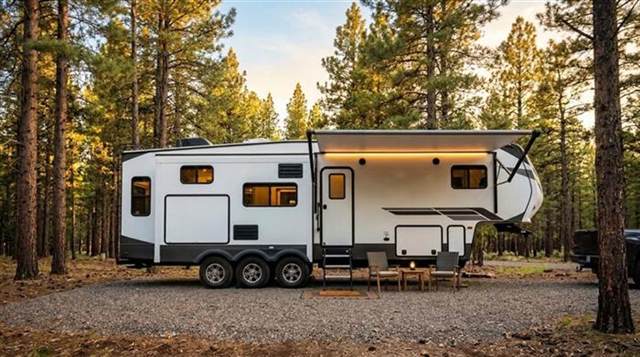
Grand Design RV
The golden child of RV rallies that conquered America with stellar customer service before corporate physics…
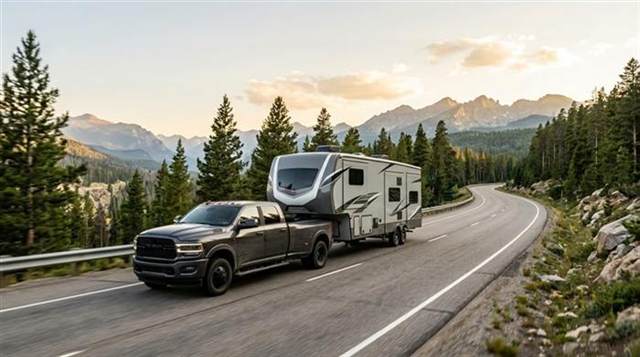
Brinkley RV
Built by industry veterans who weaponized brass plumbing fittings and square windows to embarrass every giant…
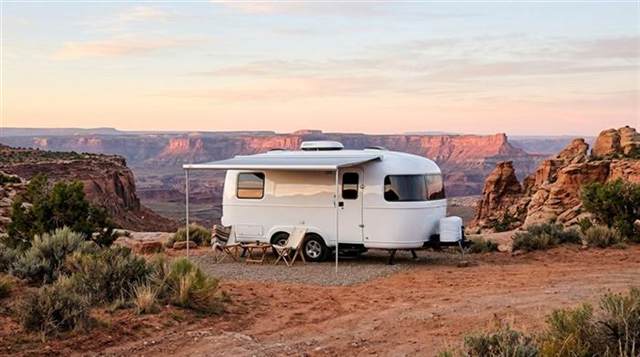
Fiberglass Shells vs. Wood-Frame Trailers
A thirty-year leak-defying boat hull that holds two people cozily versus a budget family bunkhouse held together…
Unwritten Campground Etiquette Rules
Campground walls are made of canvas and thin plywood.