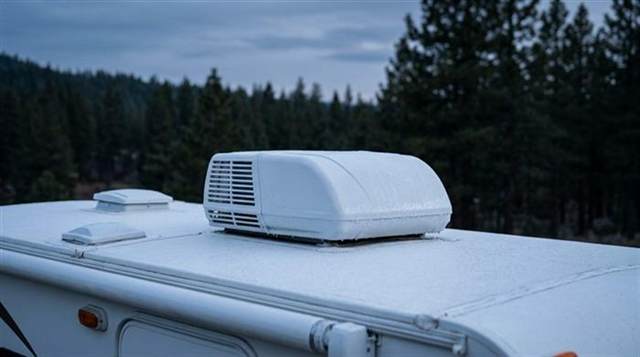
When weak airflow comes out of your camper ceiling vents and water starts dripping on the floor, your rooftop AC has frozen into a solid block of ice. Nine times out of ten, either a dusty filter starved it of air or the freeze sensor (a tiny push-in temperature probe tucked into the cold metal fins). Slipped loose or went bad. You can test that sensor at home using a glass of ice water!
01 • Reference ChartQuick Reference Chart
| Clue You Notice Inside | What Is Happening Upstairs | What To Do |
|---|---|---|
| Loud fan noise, almost zero air from vents | Ice sheet has sealed the cooling fins shut | Switch AC from Cool to Fan-Only High for 45 minutes to melt it |
| Water dripping around indoor ceiling trim | Melting ice block overflowing the roof pan | Put towels down, melt ice on Fan-Only, and clear roof drain holes |
| Foam filter gray and fuzzy with lint | Blocked air made the metal fins way too cold | Rinse foam filter in warm dish soap water, dry it, and pop back in |
| Push-in sensor hanging loose out of fins | Sensor feels warm room air instead of ice | Push the probe firmly back between the lower silver cooling fins |
| Ice-water meter reading stays unchanged | Tiny temperature wire inside probe is dead | Unplug the two-pin wire from the ceiling box and plug a $18 new one in |
| Center divider tape peeling inside ceiling | Already-cold air loops right back into intake | Seal gaps between cold side and intake side with silver foil tape |
Key Rules Before You Start
Why Humid Summer Air Turns Your AC Into an Ice Cube
Your camper AC unit does not actually pump cold air in from the roof—it sucks warm, sticky indoor air up through the ceiling filter, pulls the heat and moisture out across icy metal fins, and blows that chilled air back down. To stay ice-free, those cold metal fins need a steady, fast breeze of warm room air washing over them every single second.
Read deeper field notes
Whenever that breeze slows down—from a dusty filter, closed ceiling vents, or running the fan on low during muggy 90-degree weather—the metal fins drop well below 32 degrees. Without the freeze sensor (a little push-in wire probe wedged into the fins, often backed by a small foam plug).
Stepping in to pause the cooling pump, humidity freezes layer by layer into a giant glacier.
Step One. Melt the Ice Fast Without Flooding Your Floor
If you shine a flashlight up behind your indoor ceiling filter and spot white frost or solid ice, do not turn the whole AC unit completely off! If you shut everything off, that five-pound block of ice melts slowly all at once and sloshes right over the shallow indoor drip pan onto your bed or hallway floor.
Read deeper field notes
Grab two bath towels and lay them directly underneath. Instead, switch your thermostat from Cool over to Fan Only on High speed.
Keeping the indoor fan spinning blasts warm room air straight through the icy fins, melting the ice much faster. Meanwhile, helping blow moisture outside toward the roof drain holes.
Within thirty to forty-five minutes the rushing air sound at your vents will return to full strength and you can inspect the sensor.
The Kitchen Cup Ice-Water Test Anyone Can Do
Once the ice melts, flip the AC breaker switch OFF in your camper's breaker panel and drop the ceiling cover. Follow the thin freeze sensor wire from the cooling fins into the small metal control box and unplug its tiny plastic two-pin plug.
Read deeper field notes
Look at the probe tip first. If the wire is chewed, pinched flat, or fell out of the fins, you already found your culprit.
Wire test mode, which measures how hard power pushes through a wire (and touch the two plug pins) at room warmth, most 10k camper sensors read around 10,000. Dunk just the metal tip into a cup of crushed ice water.
If the number climbs sharply toward 25,000 or 30,000, the sensor is healthy!
Never chip or scrape ice off your camper AC's silver cooling fins with a butter knife, ice pick, or hair dryer set on scorching heat! Those fins are thinner than a soda can, and the tiny tubes behind them hold high-pressure cooling gas. Poking a hole lets the gas escape permanently, and overheating plastic drain pans warps them so water leaks inside your camper ceiling every trip.
Step-by-Step Safety & Setup Checklist
Check each step below in order before turning power or water back on:
- Switch the camper thermostat to Fan Only (High) with cooling turned OFF for 45 minutes until all ice melts and full airflow returns.
- Flip the 120-volt AC breaker OFF at your indoor panel, then pop down the ceiling filter grille and wash the foam filter clean.
- Check that the push-in freeze sensor (and its little foam block on Coleman or Dometic models) is wedged tightly into the lower silver fins.
- Seal any loose silver foil tape separating the cold blow-out side from the warm suck-in side inside the ceiling opening so cold air cannot short-cut.
- If ice still returns with a clean filter and snug sensor, unplug the two-wire sensor from the ceiling control box and test it in a cup of ice water.
Common Questions
Why is there a little square of black foam on my RV freeze sensor wire?
That snug foam cube blocks warm room air from sneaking around the back of the probe! Without the foam plug, warm cabin air blows across the tail of the sensor and tricks it into thinking the icy metal fins are still warm.
Can closing too many ceiling vents make my camper AC freeze up?
Yes! Shutting half your ceiling vents traps icy air up inside the roof box, starving the cooling fins of warm airflow and dropping them way below freezing. Keep all ceiling vents open and run High Fan on super muggy afternoons.
Does an iced-up camper AC unit mean it needs a Freon refill?
Usually it is just a clogged filter, a fallen freeze sensor, or leaky divider tape inside the ceiling box. If all three check out fine and only one tiny corner frosts up right away, a sealed cooling leak may mean replacing the rooftop unit.
Related Guides
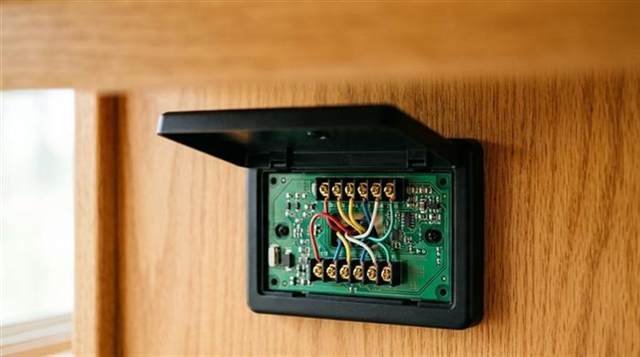
6-Wire RV Thermostat Color Chart
Unlike house thermostats that run on tiny doorbell-style AC power, a 6-wire camper wall thermostat runs on 12-volt…
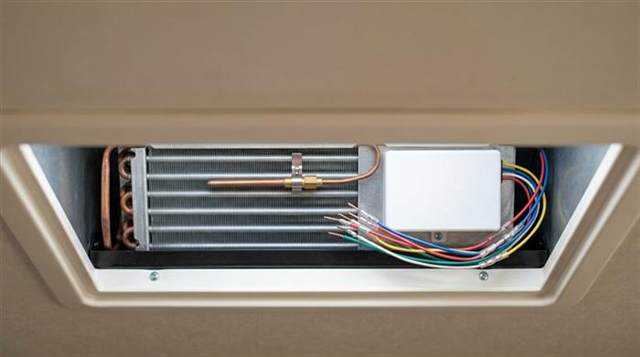
4-Wire & 3-Wire RV Thermostat Chart
How can a modern camper thermostat control High Fan, Low Fan, AC Cooling, and the Propane Heater using only 3 or 4…
Coleman-Mach RV AC Freezing Up
If your Coleman-Mach rooftop AC roars loudly on a humid day yet barely pushes cool air out the ceiling vents—or…
RV Propane & Carbon Monoxide Detector Beeping at
Woken up by a beeping RV propane or carbon monoxide (CO) detector?