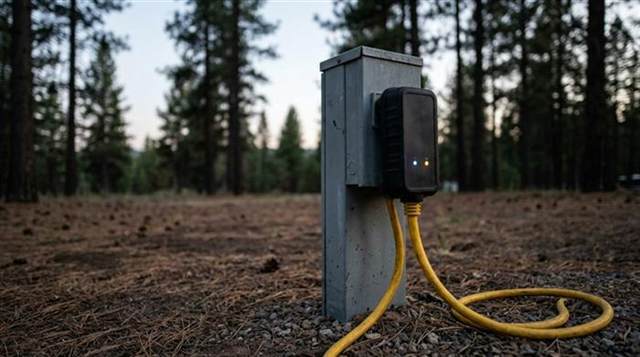
If an RV GFCI outlet trips during rain, treat it as an active electric shock warning. Do NOT grab wet outdoor cords with power on and NEVER use a hair dryer on a wet outlet! Stay out of puddles and away from wet electrical equipment. Shut off all power sources first. Flip the at the main power post campground power post breaker OFF AND turn off any onboard inverter or generator—before unplugging wet exterior cords. Per ESFI guidance, outlets exposed to water intrusion must be inspected by a qualified electrician or RV tech before restoring power.
01 • Fault Specs & Root CauseFault Summary
| What to Know | Details |
|---|---|
| Screen Code / Blink Pattern | GFCI TRIP |
| Appliance Maker | Leviton / Hubbell |
| Camper System | 12V & Shore Power |
| How Urgent Is It? | Shut Off Power Before Touching Wet Equipment |
| Basic Tools Needed | Flashlight. Do NOT use a hair dryer or touch wet cords while powered on. |
What Is Happening Inside the Unit
A Ground Fault Circuit Interrupter (GFCI) monitors the balance of electric current between hot and neutral conductors and trips open within milliseconds whenever as little as 4 to 6 milliamps of current leaks toward ground—protecting you from severe or fatal deadly shock. In an RV, a single indoor GFCI outlet (often in the bathroom, galley, or pass-through bay).
Read deeper field notes
Often protects further down the wire bathroom, kitchen, exterior patio, and electric water-heater circuits. Rainwater entering a worn exterior outlet cover, wet outdoor appliance cords, or an internal appliance ground fault causes current leakage that trips the GFCI.
Step-by-Step Fix
Stay Clear of Wet wiring Cords, Outlets, and Standing Water
Never touch wet plugs, wet extension cords, or damp exterior RV outlets while power is connected. Never stand on wet ground or in puddles while handling electrical equipment. Water conducts power and can energize wet surfaces or the metal frame of the RV.
Shut Off ALL at the main power post Power Sources. Power post, Inverter & Generator.
Before disconnecting any outdoor appliance or inspecting an outlet, shut off the circuit breaker at the campground power post (in dry, safe conditions) AND turn off your RV’s main breaker, onboard generator, and 120V power inverter. Remember. Turning off campground power alone does NOT turn off power to RV outlets if an onboard inverter or generator is running!
Disconnect Outdoor Appliances Only After All Power Is Verified Off
Once all 120V power sources (campground power post, generator, and inverter) are completely shut off, unplug outdoor string lights, portable fridges, or chargers that were plugged into exterior outlets and move them indoors out of the weather.
Do Not Use a Hair Dryer on Wet Outlets or Force a Wet GFCI to Reset
NEVER blow a hair dryer or heat gun into a damp wiring outlet! Holding a 120-volt handheld appliance near a wet outlet creates an extreme deadly shock hazard, and surface drying does not remove conductive residue or corrosion inside the electrical box.
Have Water-Damaged Outlets Inspected by a trained RV tech
Per the wiring Safety Foundation International (ESFI), electrical outlets and equipment that have been exposed to water intrusion can suffer internal corrosion and wall foam damage and should not simply be dried out and turned back on. Keep the affected circuit breaker OFF and have a qualified RV tech or electrician inspect and replace any water-damaged outlet and weather seal.
NEVER use a hair dryer near a wet wiring outlet. Never handle wet power cords. Meanwhile, powered on. Never repeatedly press RESET on a tripping GFCI during a rainstorm. Never open the GFCI electrical box to disconnect LOAD wires or bypass GFCI protection. A tripping GFCI is actively preventing a potentially fatal electric shock.
Stop & Call a Repair Tech When: Call a qualified RV tech or licensed electrician whenever rain or moisture has entered an exterior or interior RV outlet, if a GFCI trips with no obvious dry indoor cause, or if an exterior rain-tight cover and gasket need new.
Spare Parts to Carry
- Plug-in GFCI outlet tester (for testing dry indoor outlets only)
- Flashlight for safe hands-free visual checkup once all power sources are off
- Contact info for a certified mobile RV tech
Common Questions
Why should I never use a hair dryer to dry out a damp exterior RV outlet?
Using a 120-volt hair dryer near water or a wet outlet risks severe or fatal electric shock per U.S. CPSC and ESFI safety warnings. In addition, ESFI warns that water inside an wiring outlet leaves contaminants and corrosion on internal parts that surface heat cannot make safe—water-exposed outlets must be inspected and replaced by a trained RV tech.
Does turning off the campground power post breaker guarantee my RV outlets are dead?
Not always! Many RVs have an onboard 120V inverter, or automatic generator start. That on its own powers the GFCI circuit the moment campground power turns off. Always shut off your onboard inverter, generator, and main RV breaker in addition to the campground power post breaker.
Can my electric water heater element trip the indoor GFCI outlet?
On some RV floorplans, the 120V convenience outlet feeding the electric water heater element is wired further down the wire of the GFCI. If the GFCI trips in dry weather, turn the 120V electric water heater switch OFF and have a qualified RV tech test the heating element and circuit wall foam.
Related Guides
WFCO RV Converter Not Charging Battery
Your 120V outlets work on campground power, yet your 12V cabin lights are dimming and your house battery is not…

RV Propane & Carbon Monoxide Detector Beeping at
Woken up by a beeping RV propane or carbon monoxide (CO) detector?
Progressive Dynamics Lithium Switch Guide
Upgrading your camper to lithium batteries with a Progressive Dynamics converter.

Stopping Winter RV Condensation & Mold
CRITICAL SAFETY WARNING.